Learn to read notation one chord at a time
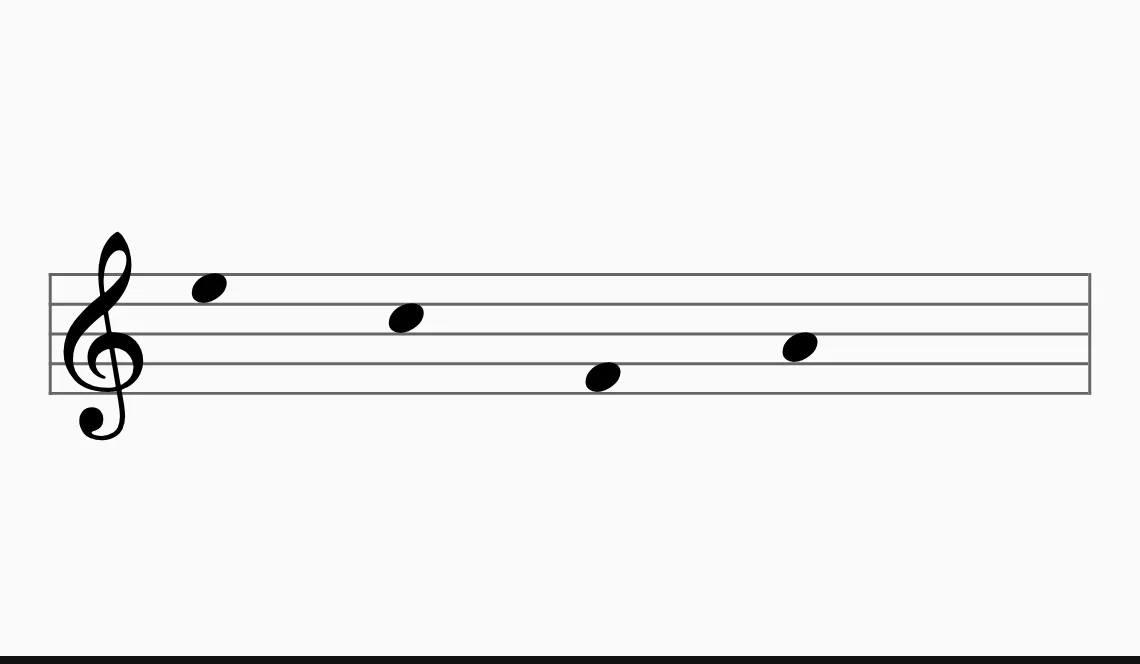
Each chord is printed on a staff instead of named, either stacked or laid out as a run of notes going up, going down or in shuffled order.
Recognize the chord at a glance
Beginners read music one note at a time: find the line or space, then count up from a note they know. Fluent readers look at a stack of notes and recognize the chord, much as you read a word without spelling it out.
You can practice this directly. Switch the question from the chord’s name to the chord on a staff, and each question becomes a short reading exercise that you answer on the keys.
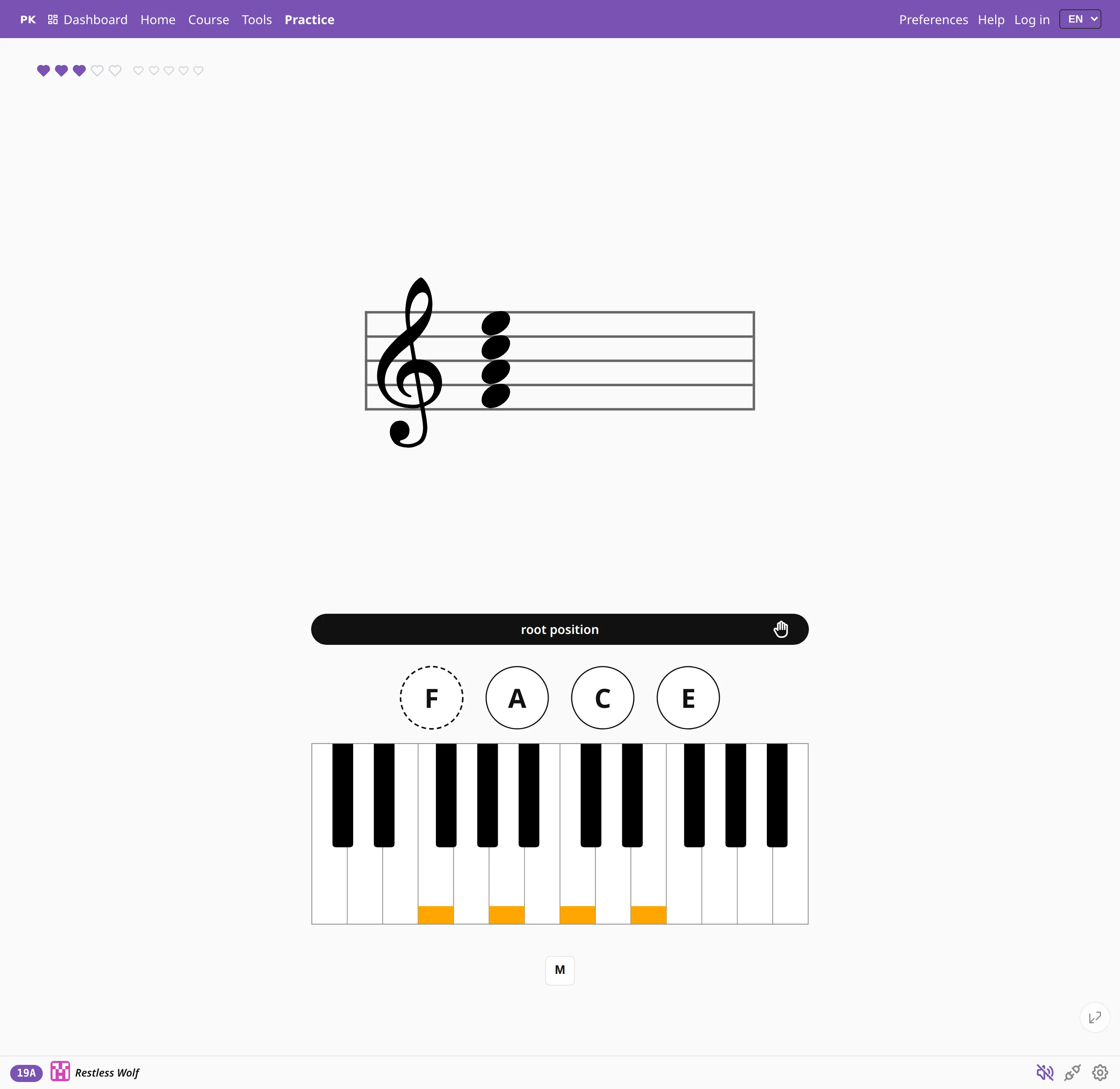
Four ways to print the same chord
The same four notes can be printed in four layouts, and each one practices something different:
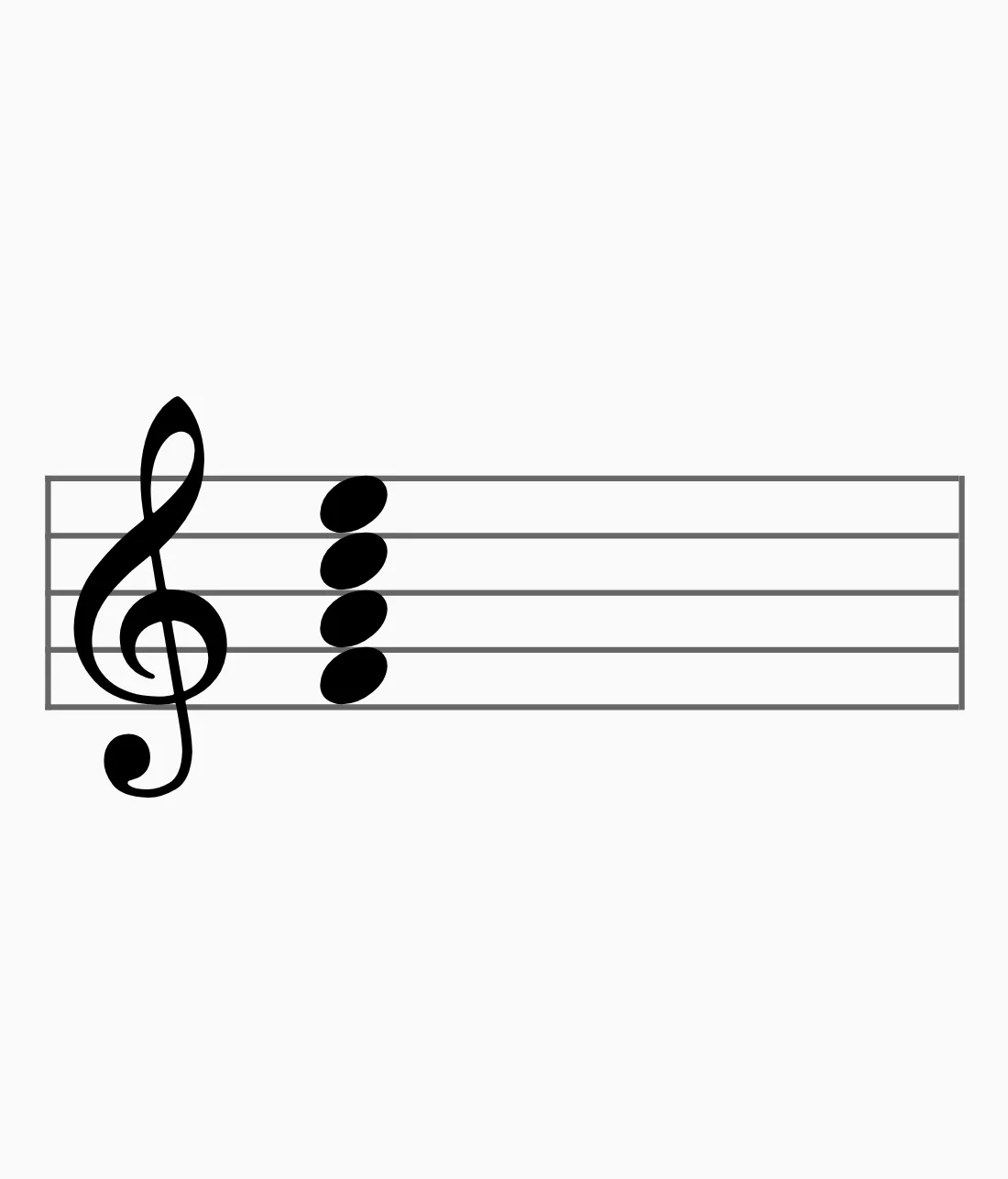
- Harmonic: the notes are stacked, as a chord is written in a score, so you learn to read the shape at a glance.
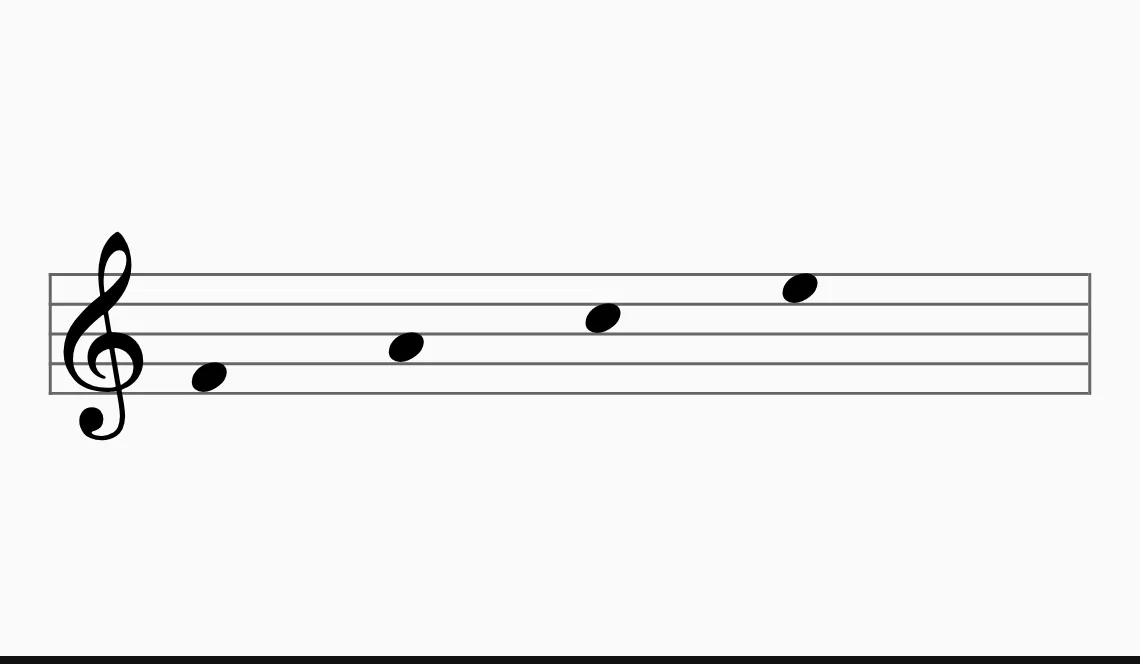
- Ascending: the notes run left to right from the bottom, like a broken chord played bass first.
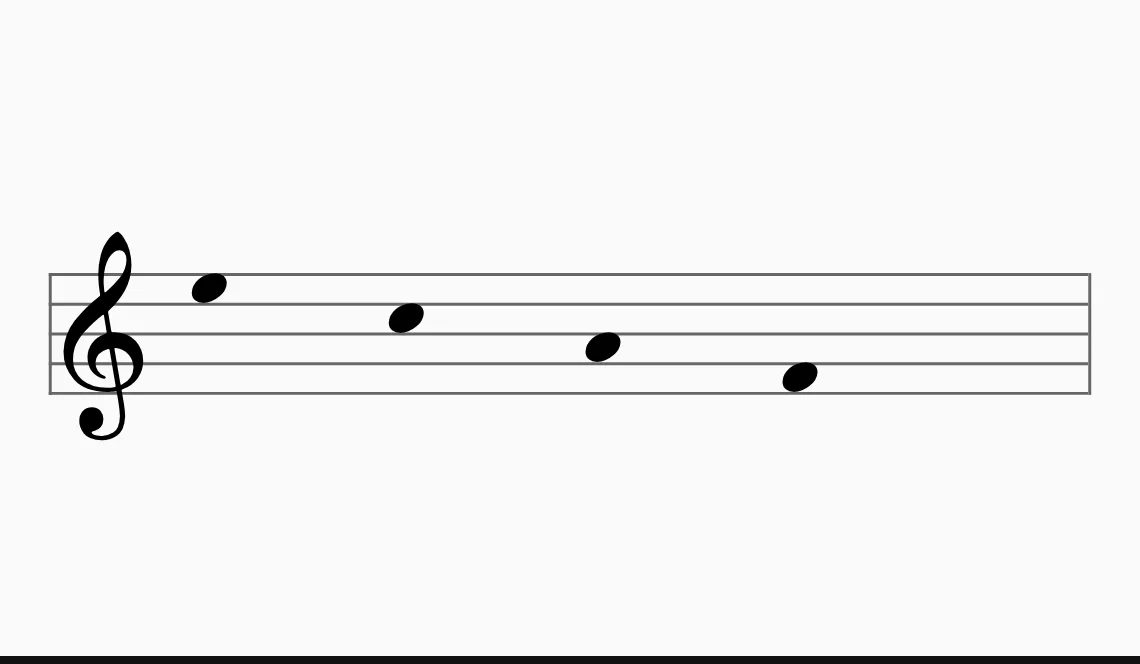
- Descending: the notes run from the top down. Beginners find this direction harder, which is a good reason to practice it.
- Shuffle: the notes come in random order, so there is no shape to rely on and you have to read every note.
Where to set it
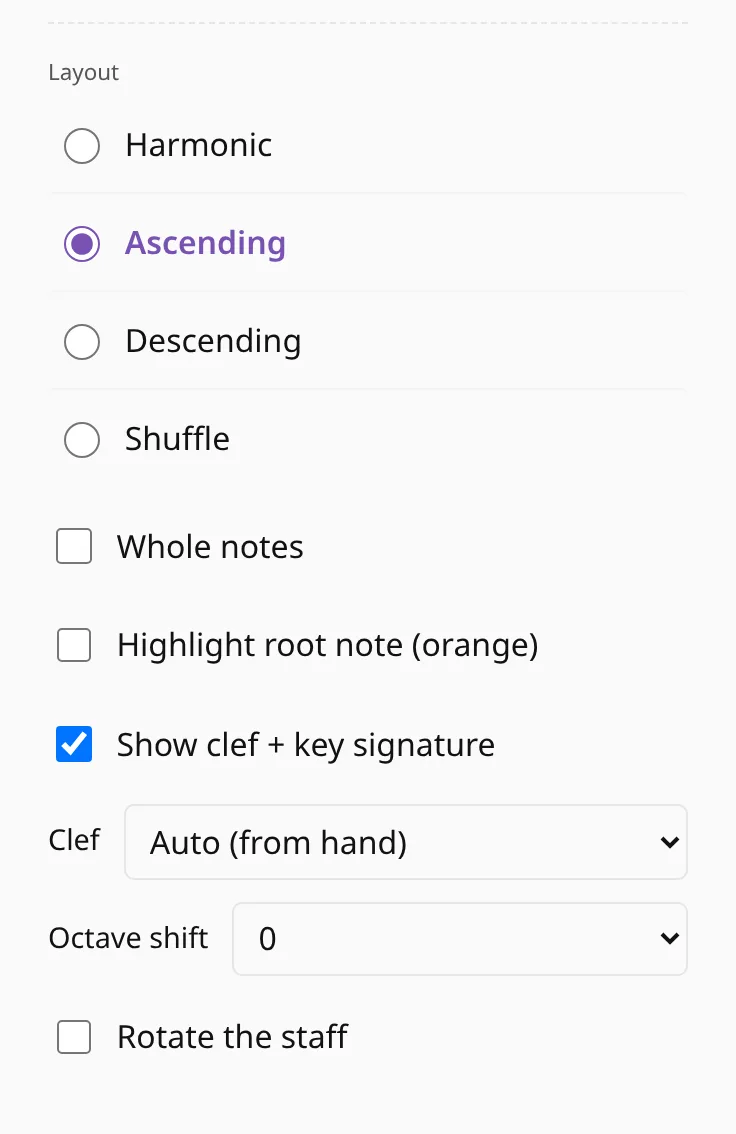
You choose the layout in Preferences, next to the other notation options: whole notes or filled ones, the clef shown or hidden, and the root highlighted. The layout does not affect how you play the chord. You can read it shuffled and play it as a block, or read it stacked and roll it.
Without a keyboard, you can use the naming quiz with the staff as well: read the chord and pick its name.