The course and the tutorials
A step-by-step course from “where is A?” to chords in both hands, with about 120 exercises in the text, plus tutorials on modes and upper structures.
A course with exercises in the text
The Chord & Sight-Reading Course starts at the very beginning, with the black keys in groups of two and three, the letter names and finding a key without looking. From there it covers the staff, thirds and fifths, first chords, inversions, intervals and every chord type, then arpeggios, higher octaves, the left hand and songs.
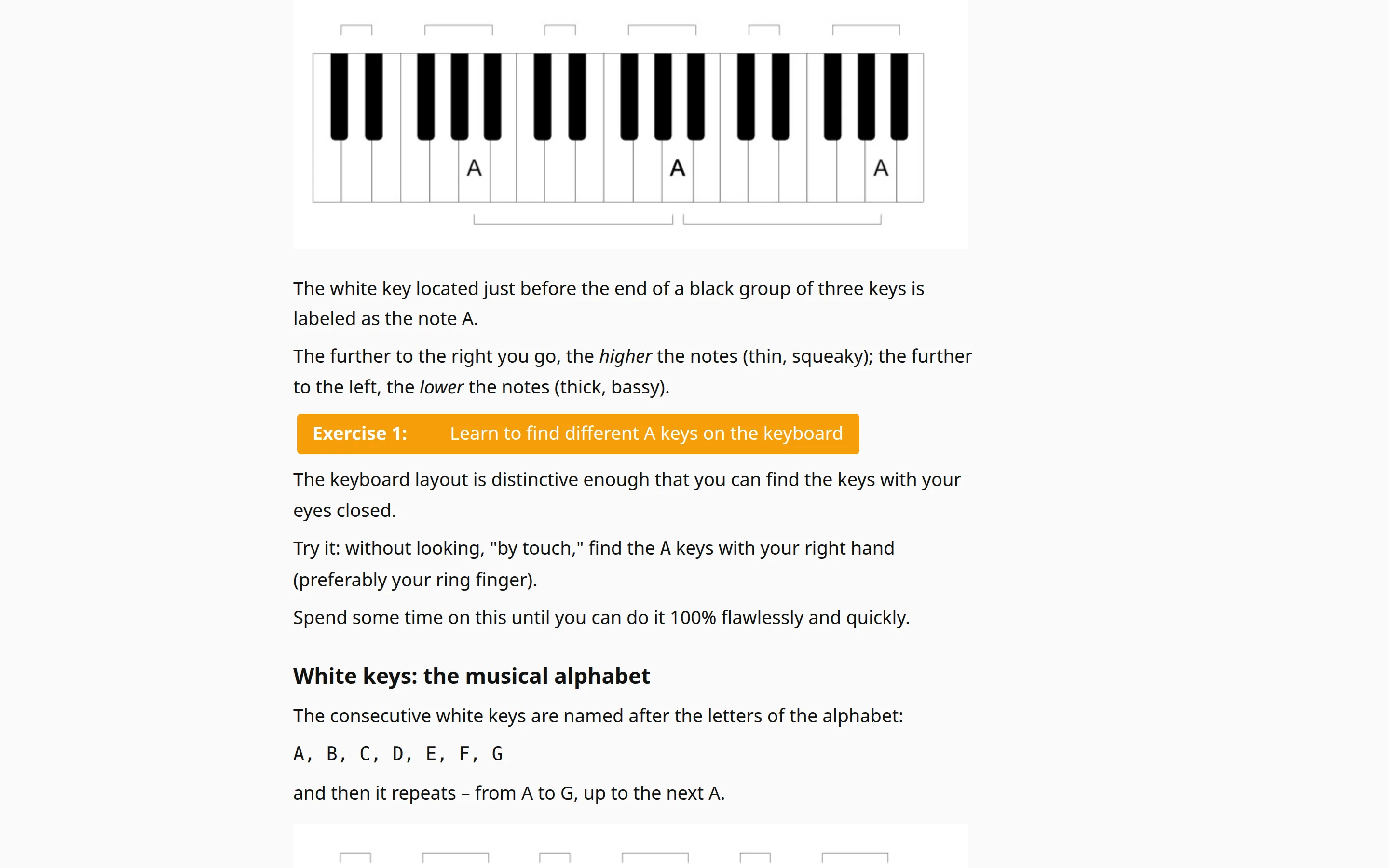
Every few paragraphs there is an exercise button. It opens the practice screen with that drill, and afterwards brings you back to the text.
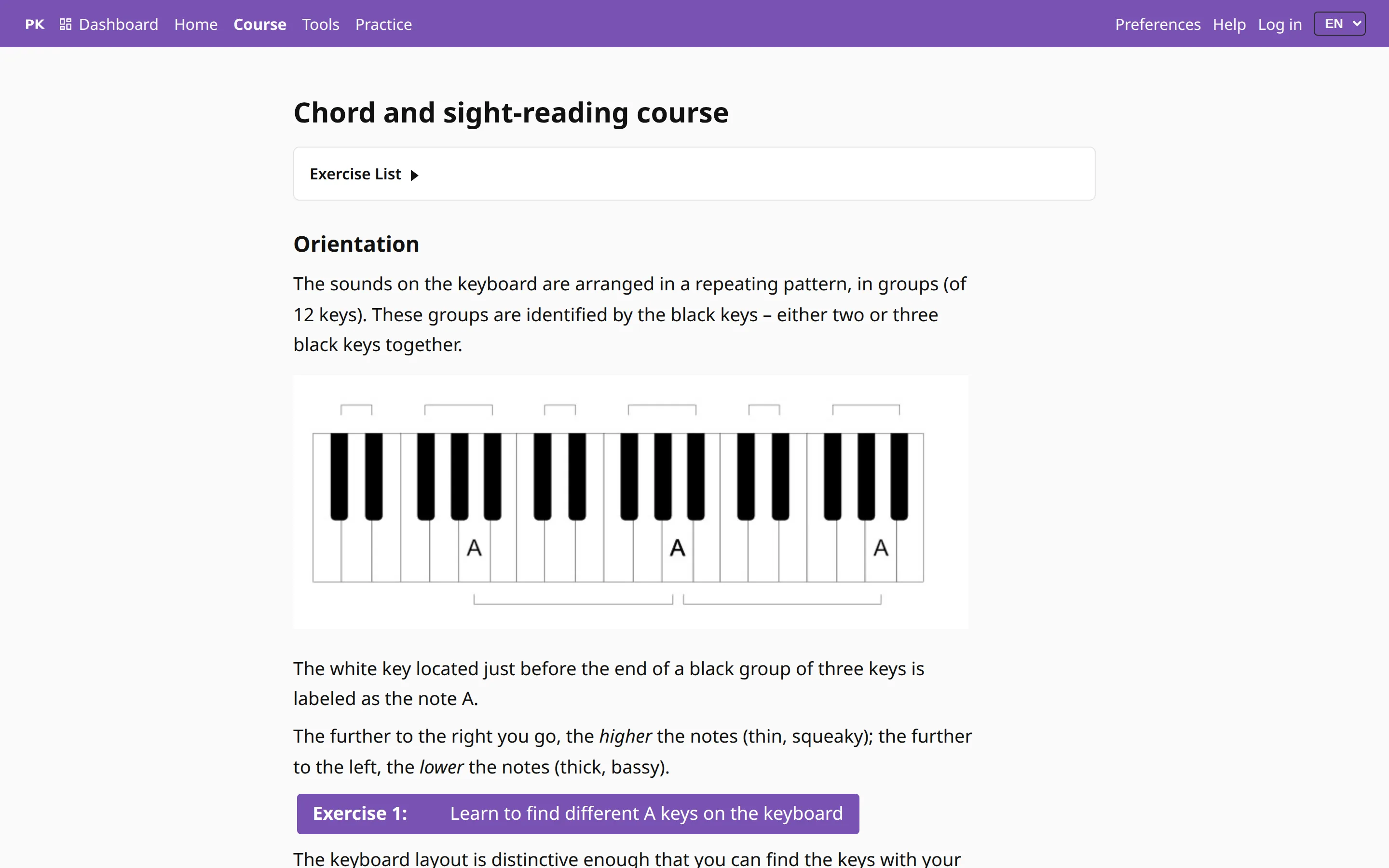
One chapter turns the staff sideways so it lines up with the keyboard, then straightens it again step by step. A setting lets you keep the staff turned all the time; see turning the staff.
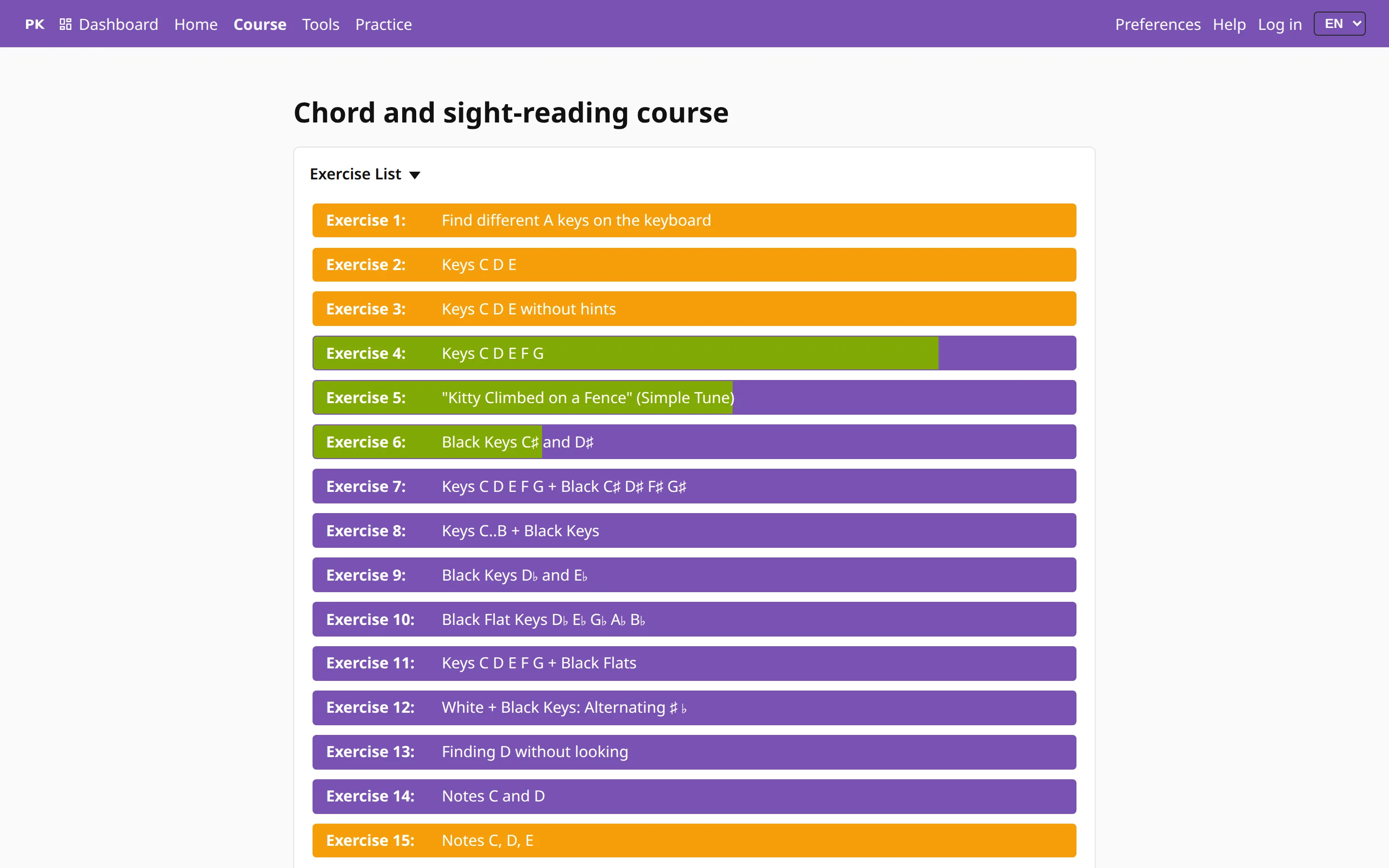
Progress on every exercise button
Each exercise button fills with green up to your best score so far and turns solid orange once you complete the exercise (all hearts, 99% or better). The Exercise List at the top shows the whole course as one column of progress bars, so you can see what is done, what is nearly done and where to continue next time.
Tutorials for the next step
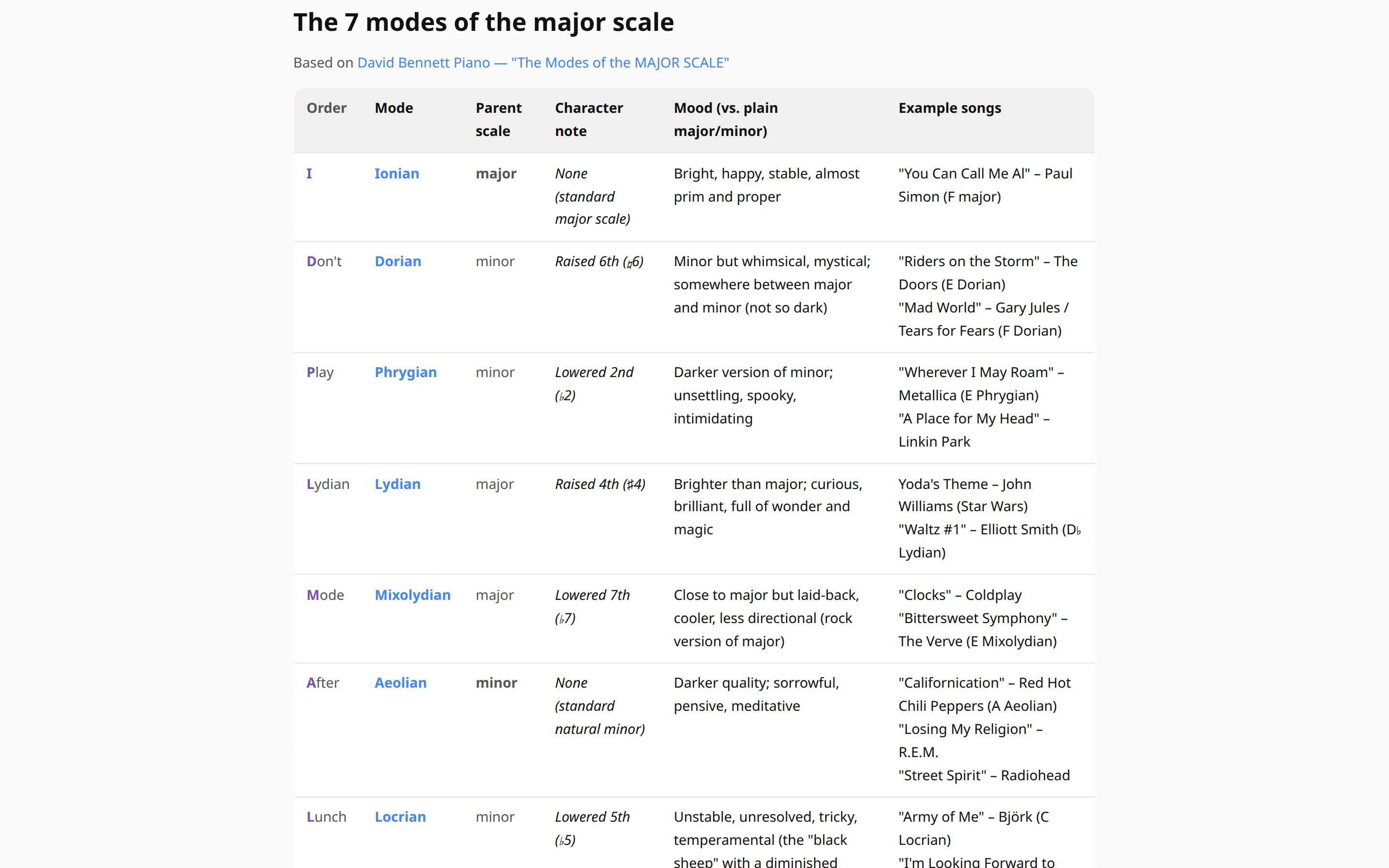
- Piano modes: an ear-first video course covers the seven modes of the major scale: a mnemonic for their order, the note that gives each mode its color, songs that use it, and buttons to hear the mode and to drill it. There is more about the modes tutorial on its own page.
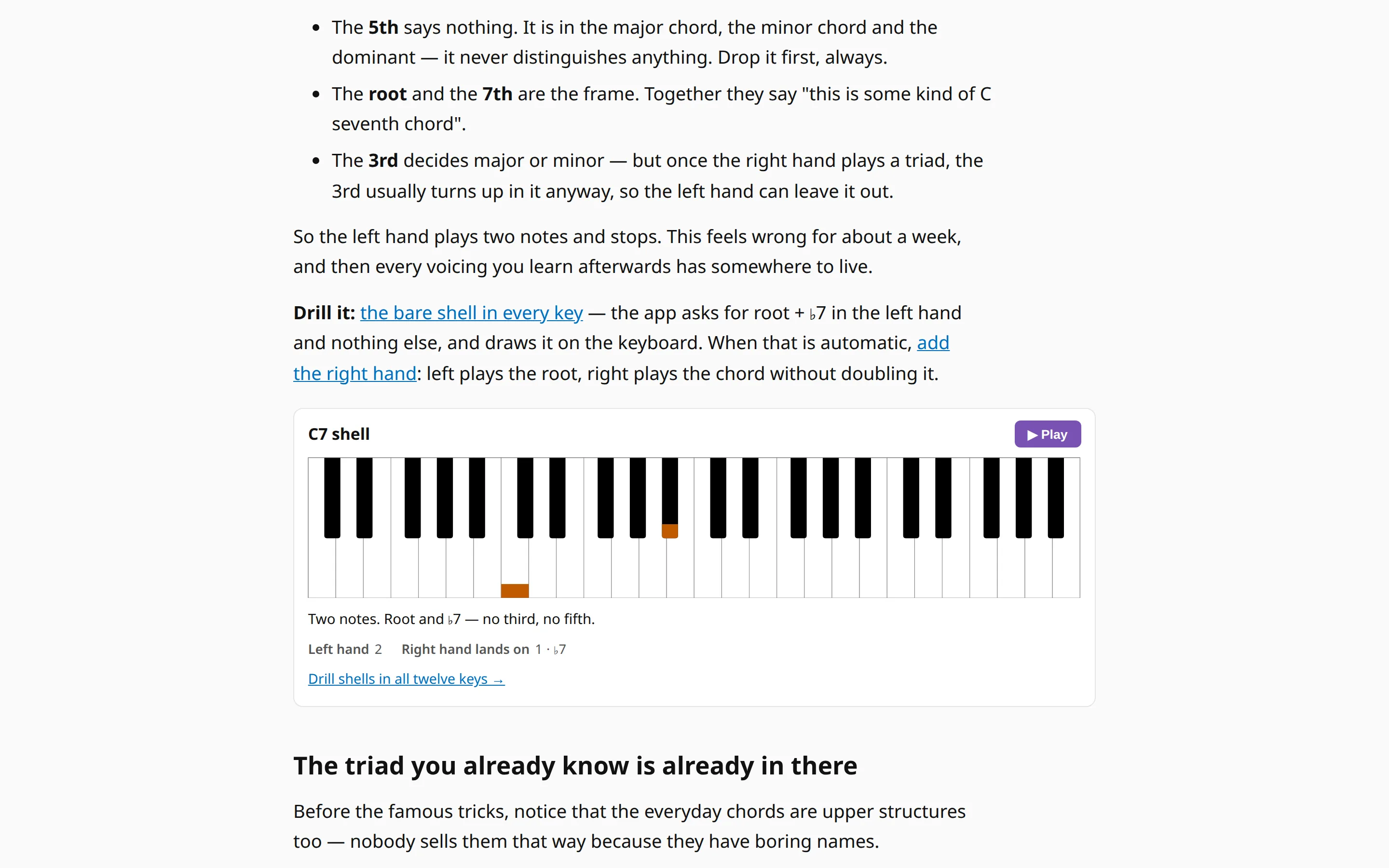
- Upper structures & polychords explains why a jazz chord is often a simple triad over a bass note. The examples are on a keyboard you can play back, and each technique has its own drill.
Practice sets to work through
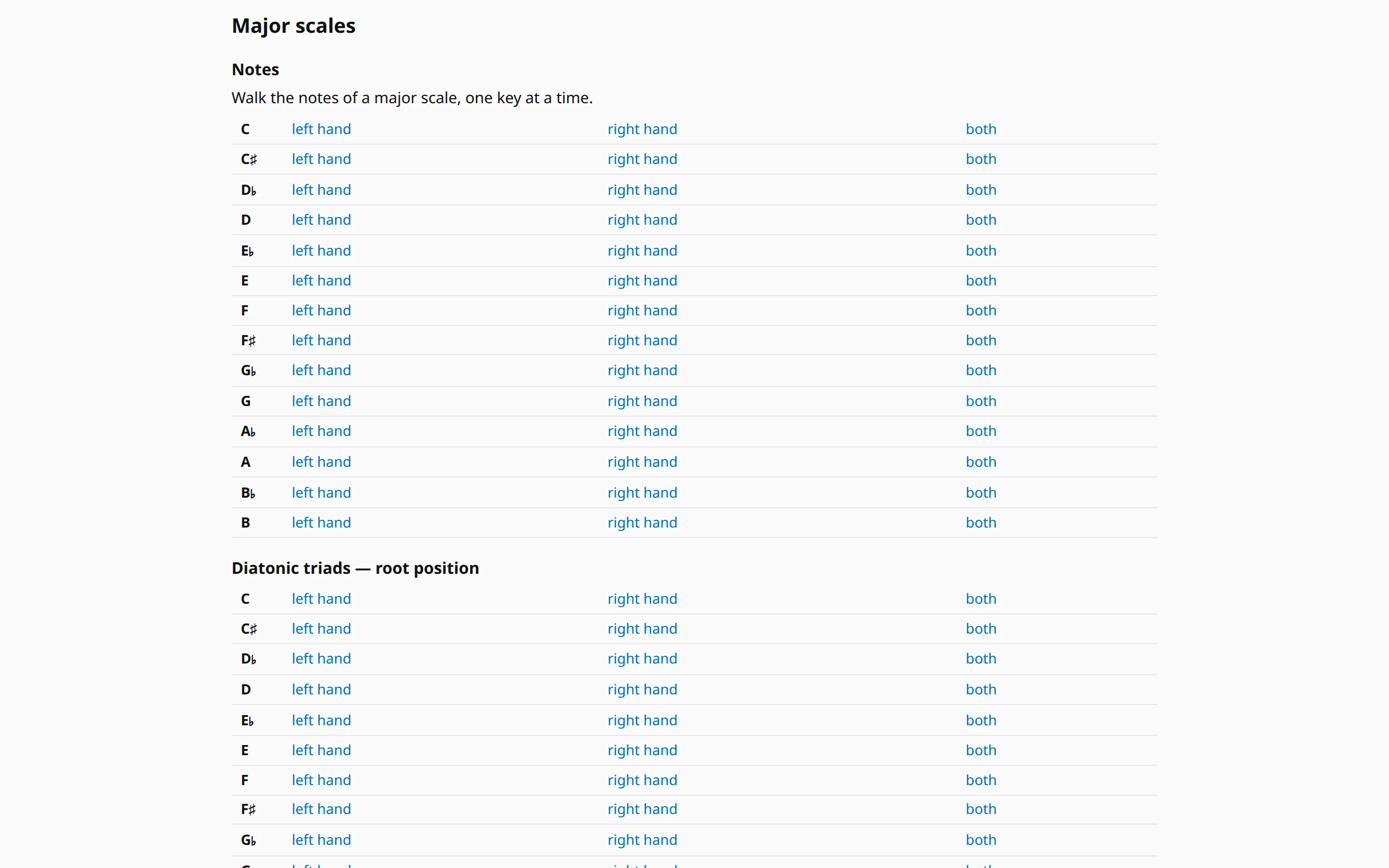
If you want to practice without the course text, Practice sets are plain tables of notes on each clef, the major scales, diatonic triads in every inversion and seventh chords. Each key has its own row, with links for the left hand, the right hand or both.