Modes of the major scale
A tutorial on the seven modes — what each one sounds like, which note gives it its color, and a button to drill it — plus a roulette that picks a scale for you.
Seven modes on one page
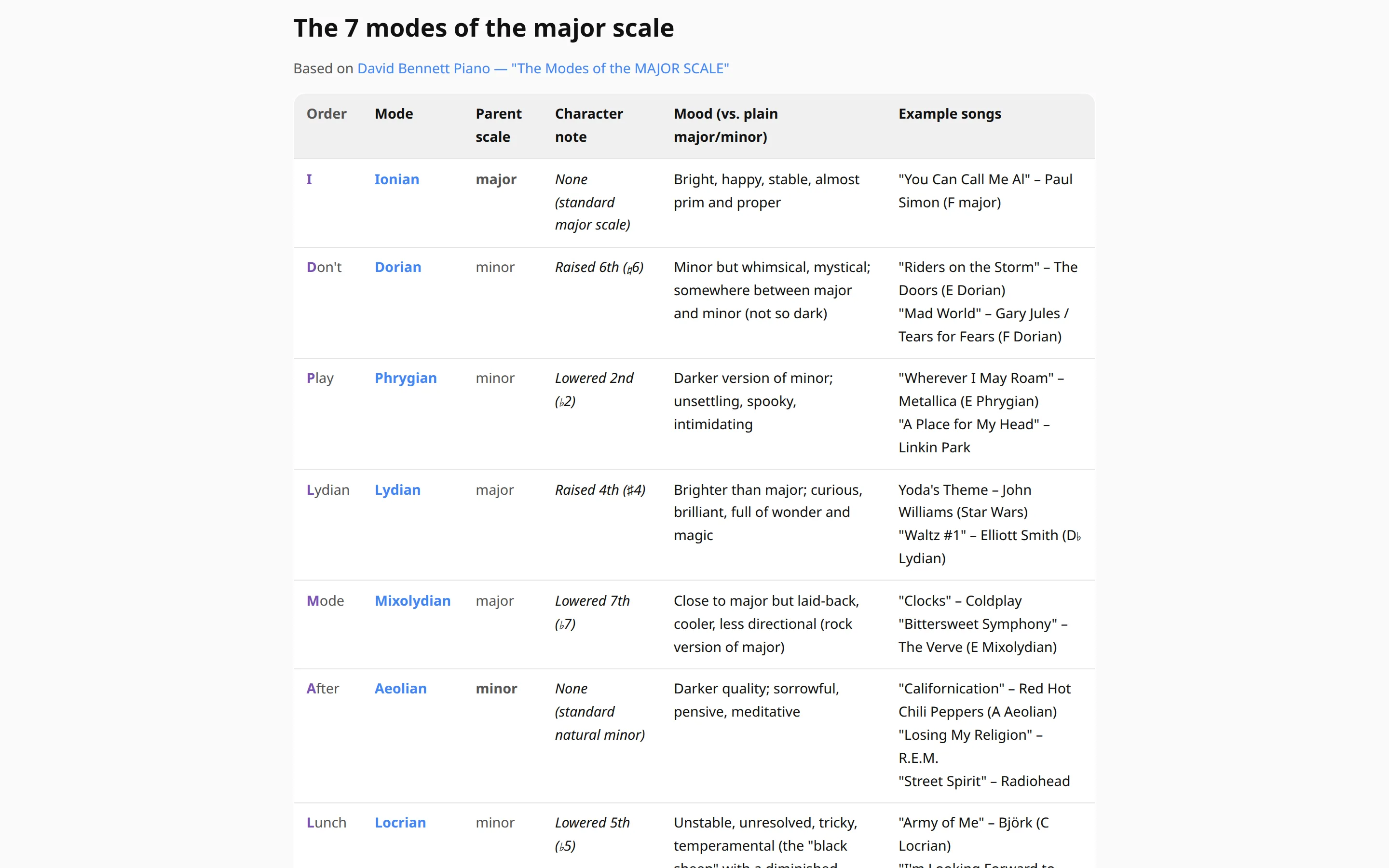
Piano modes: an ear-first video course covers the seven modes of the major scale, from Ionian to Locrian. For each one it gives the parent scale (major or minor), the one note that makes it different, its mood, and songs that use it. A short phrase helps with the order: I Don’t Play Lydian Mode After Lunch.
Next to each mode is a link that opens it as an exercise, starting on C.
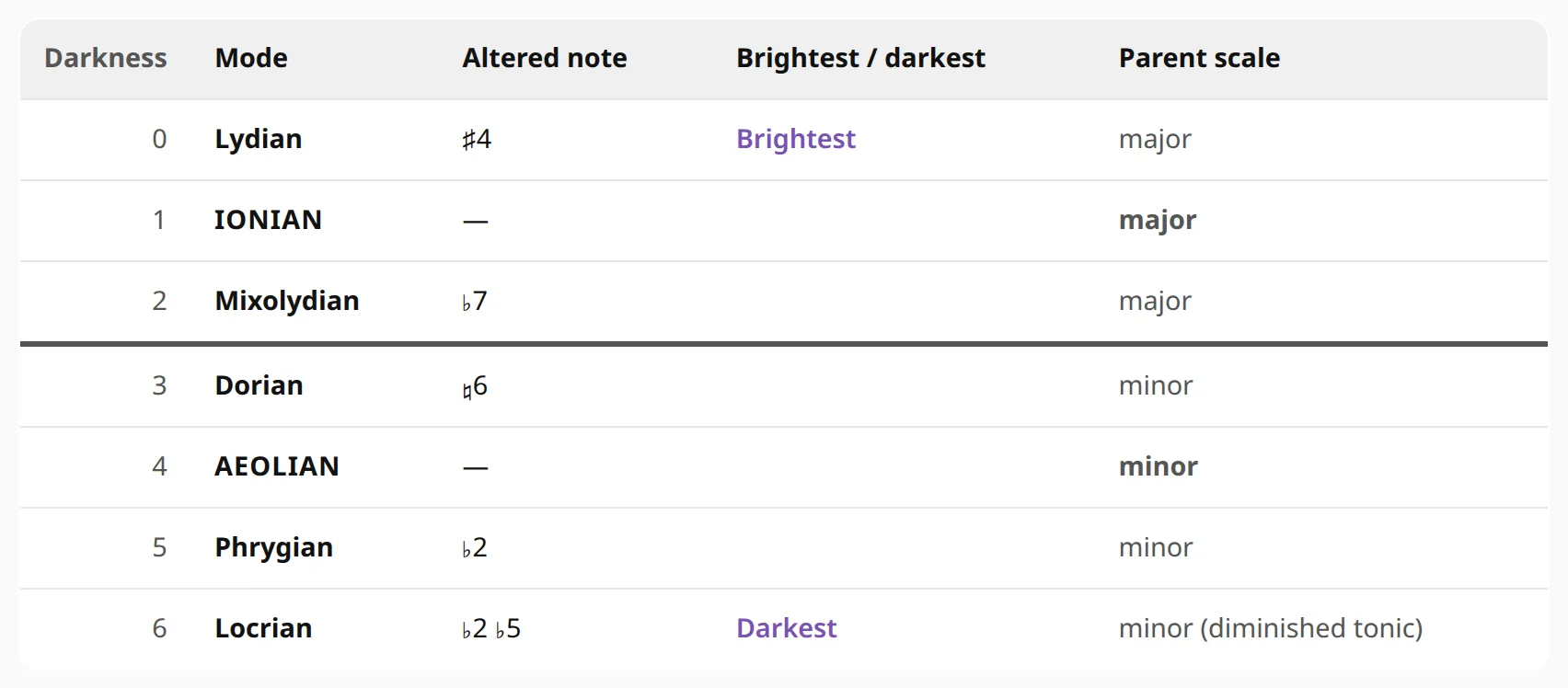
From brightest to darkest
A second table sorts the modes by brightness: Lydian, with its raised fourth, at the bright end, and Locrian, with its diminished tonic, at the dark end. Each step down changes one note, so the table also shows how the modes connect.
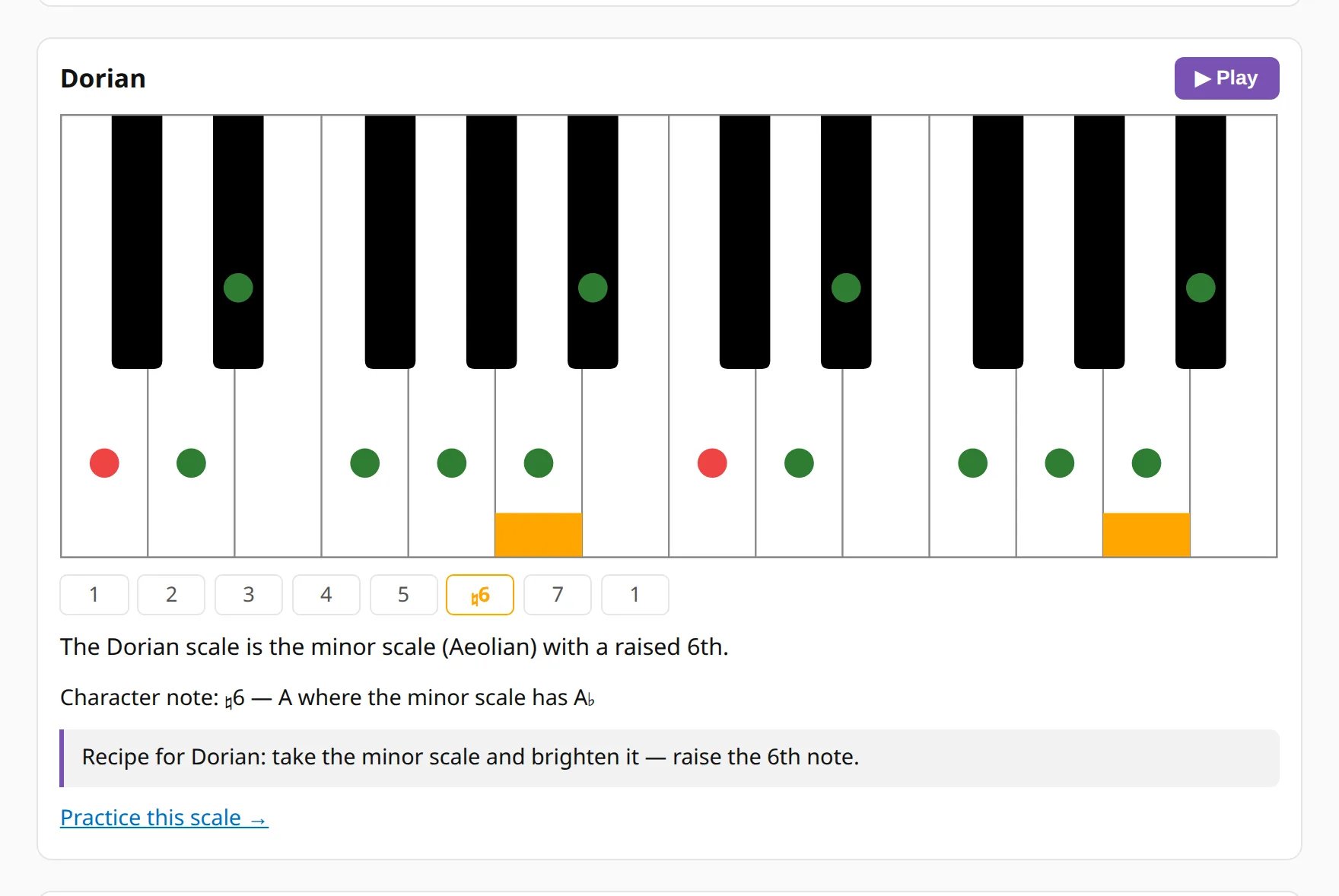
Hear it, then play it
Every mode is drawn on a keyboard, starting on C, with the tonic and the character note marked. Play plays the scale; Practice this scale opens it as an exercise. The page ends with four ready-made drills: Dorian as triads, Mixolydian as seventh chords, Lydian with degree numbers, and Phrygian by ear. For more depth, it also links a set of video lessons.
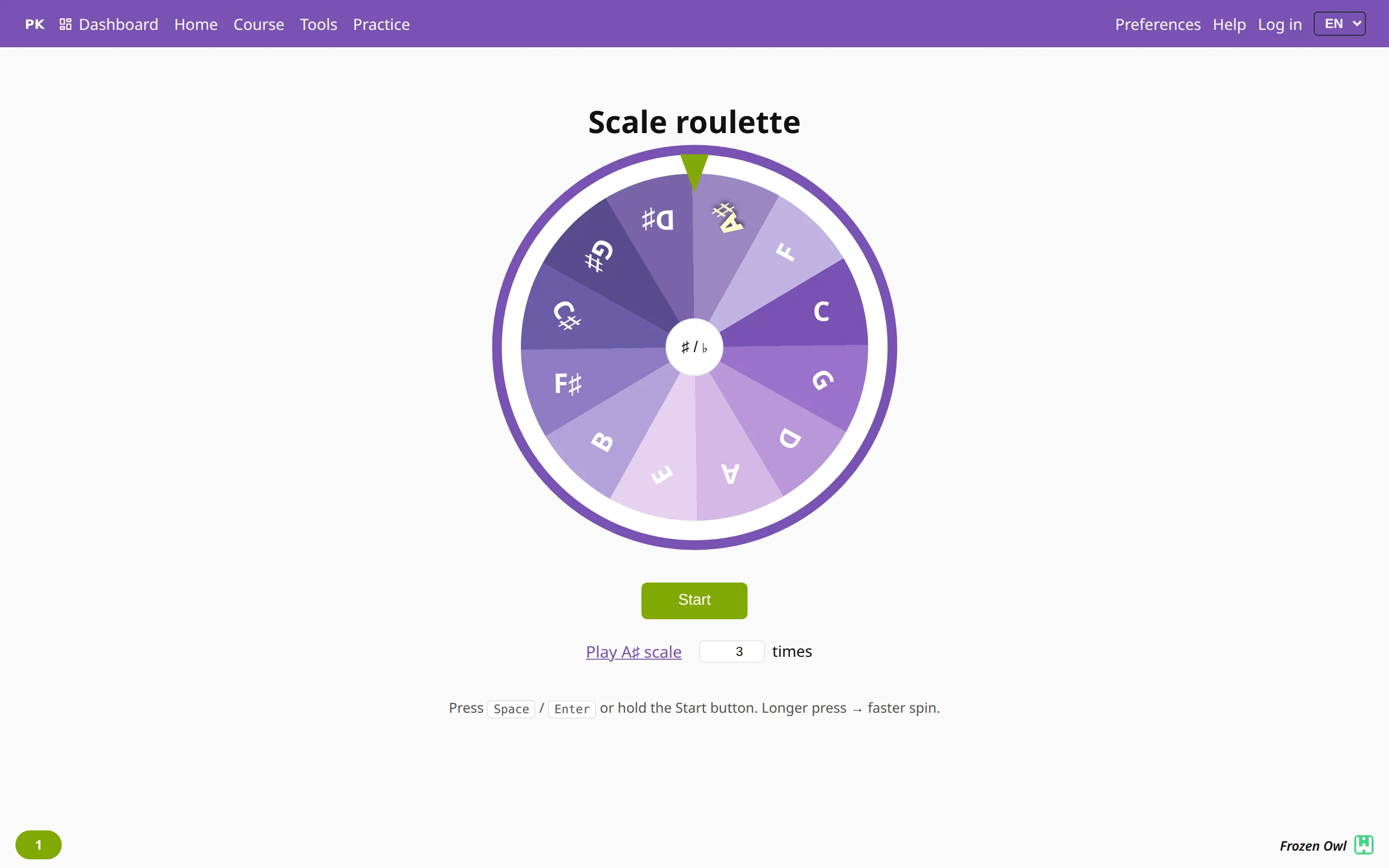
Scale roulette
If you cannot decide which scale to practice, let the scale roulette choose. The wheel holds the twelve major keys in circle-of-fifths order. Hold Start — the longer you hold, the faster it spins — and when it stops, one click opens that scale as an exercise. The button in the middle switches the black keys between sharps and flats.