Scales, and the chords inside them
Play a scale one note at a time with its notes marked on the keys, then drill the triads and seventh chords of the same key.
One note at a time
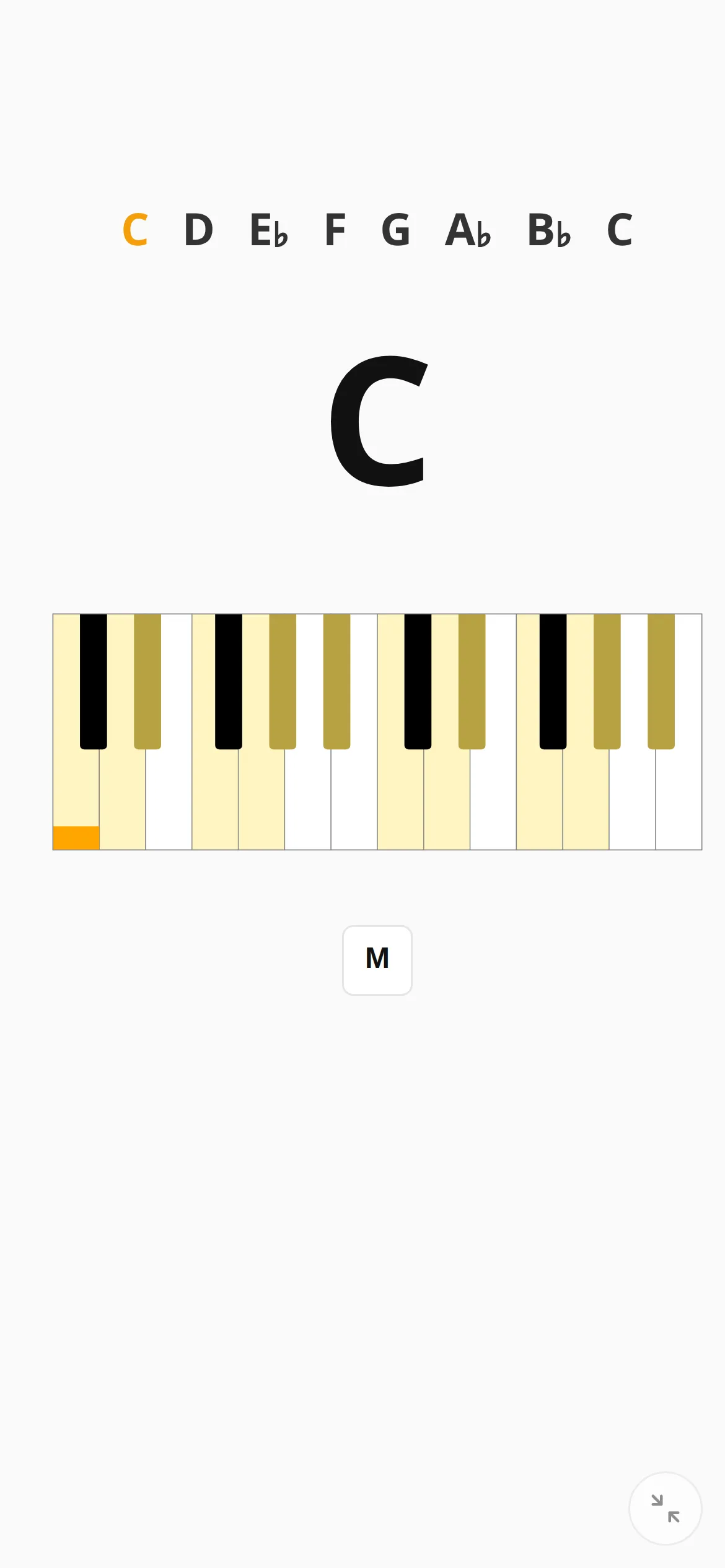
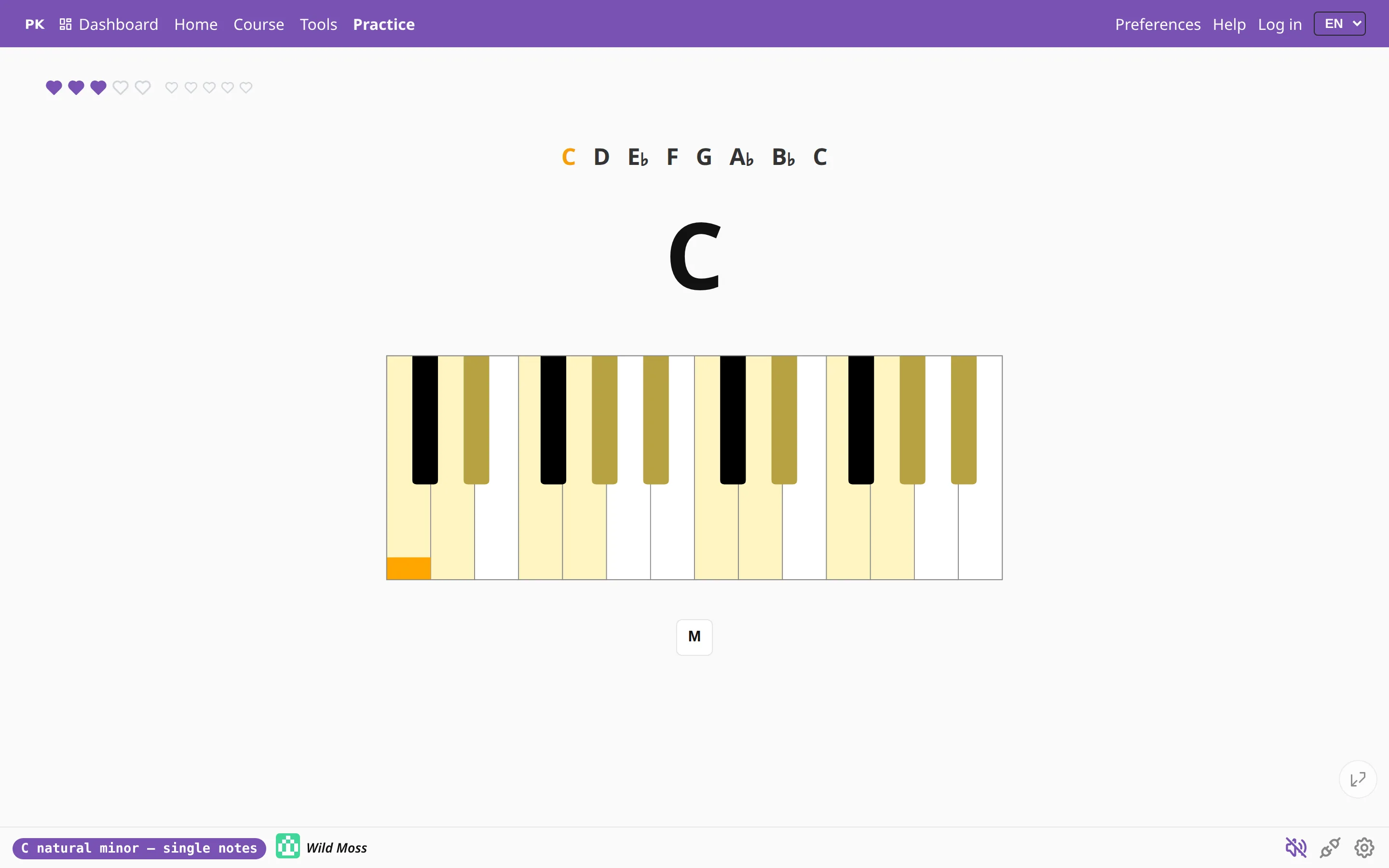
Pick a key and a scale and PianoKitty asks for it note by note. The row above the question shows the whole scale with your current note marked, so you can see what you have played and what comes next.
There are 23 scales, each in every key: major and the three minors, the church modes, the blues and bebop scales, and the chromatic scale.
The scale, drawn on the keyboard
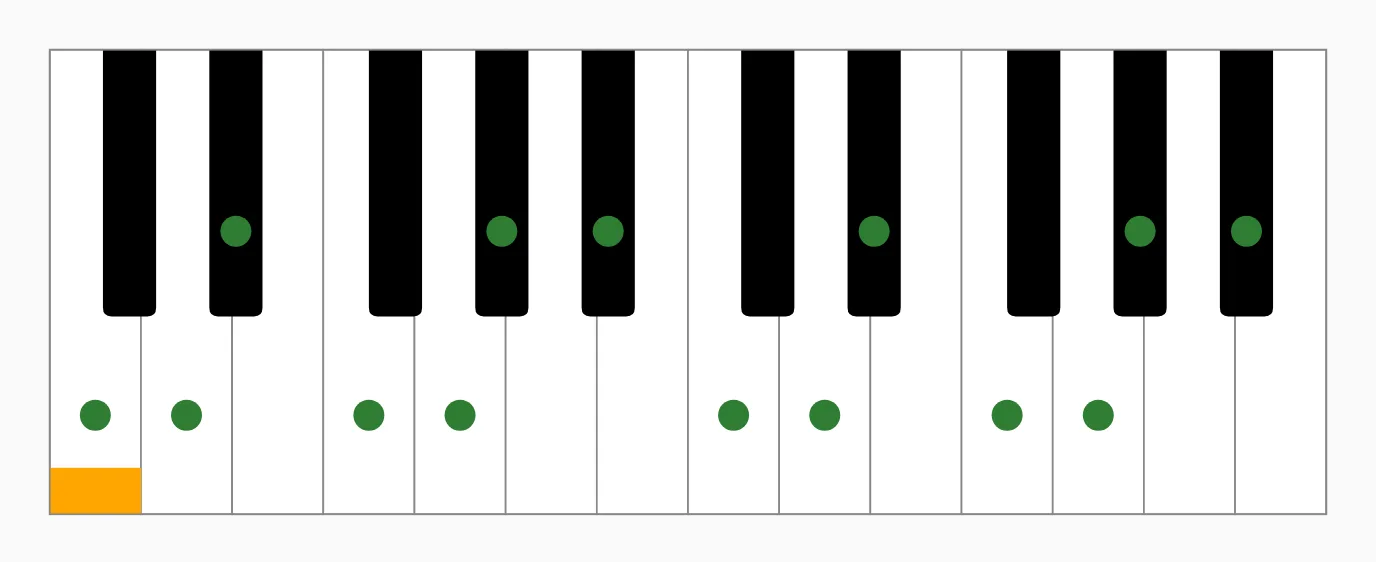
Scale highlighting marks every note of the key on the keyboard, either as tinted keys or as dots under them, whichever distracts you less. Seeing the scale under your hands makes its shape easier to remember.
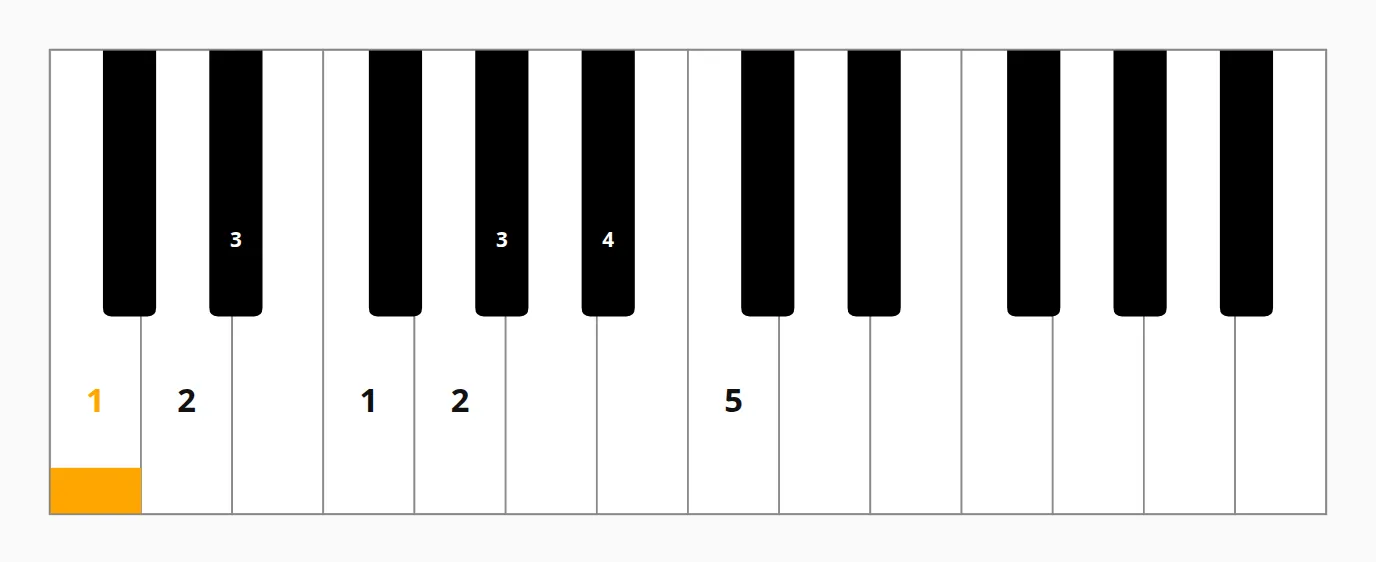
You can also show fingering: the numbers 1 to 5 over the keys, following the standard fingering for the scale. Fingering is hard to work out on your own, so it helps to have it in front of you.
The chords of the key
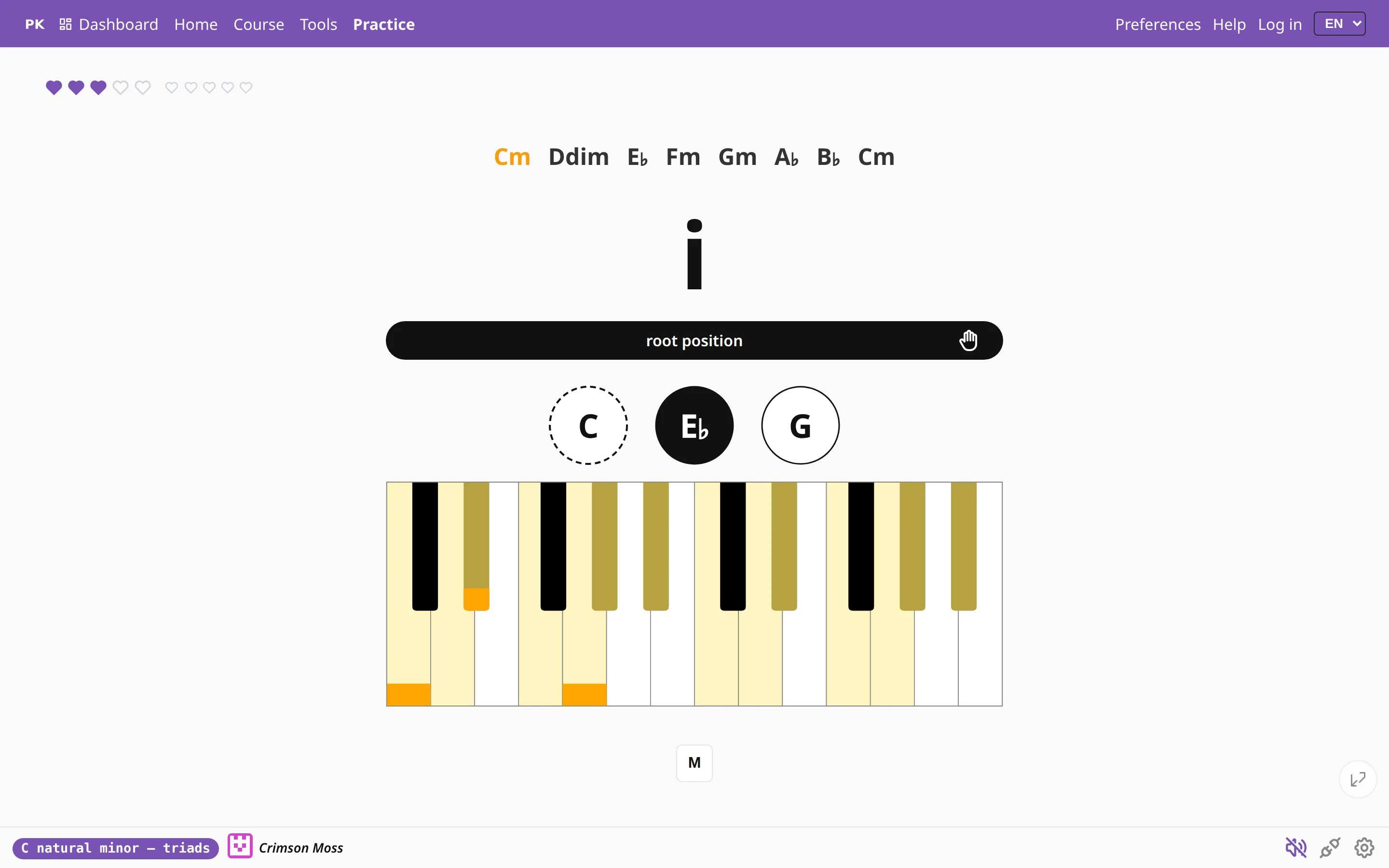
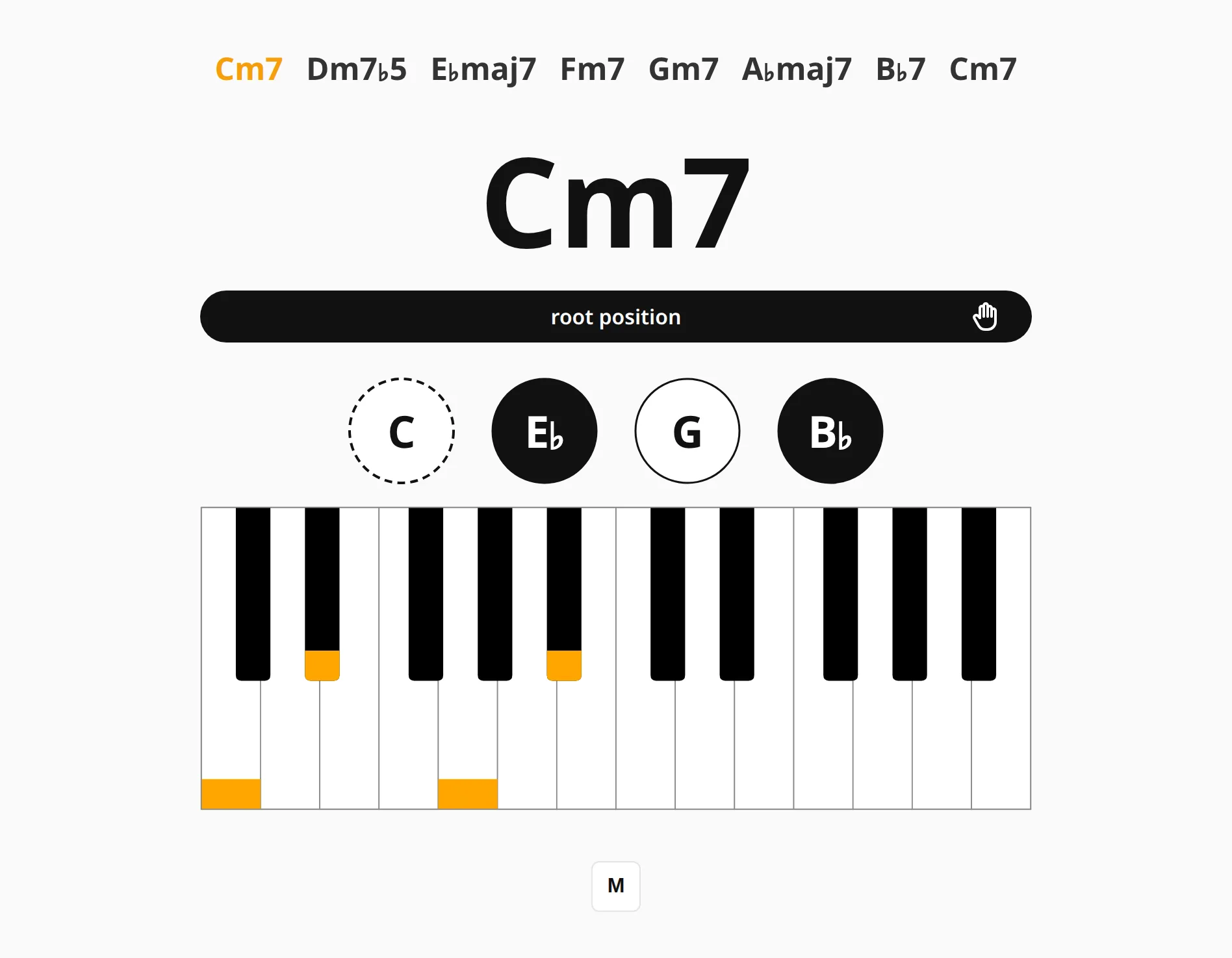
Switch the voicing from single notes to triads, sevenths or ninths, and the app asks for the chords built on each degree of the same scale, in order. Together they make up the harmony of the key.
The question can name them as chords (C, Dm, Em…), as Roman numerals (I, ii, iii…), as numerals with quality marks, as plain numbers, or by function (tonic, dominant, subdominant).
How it runs
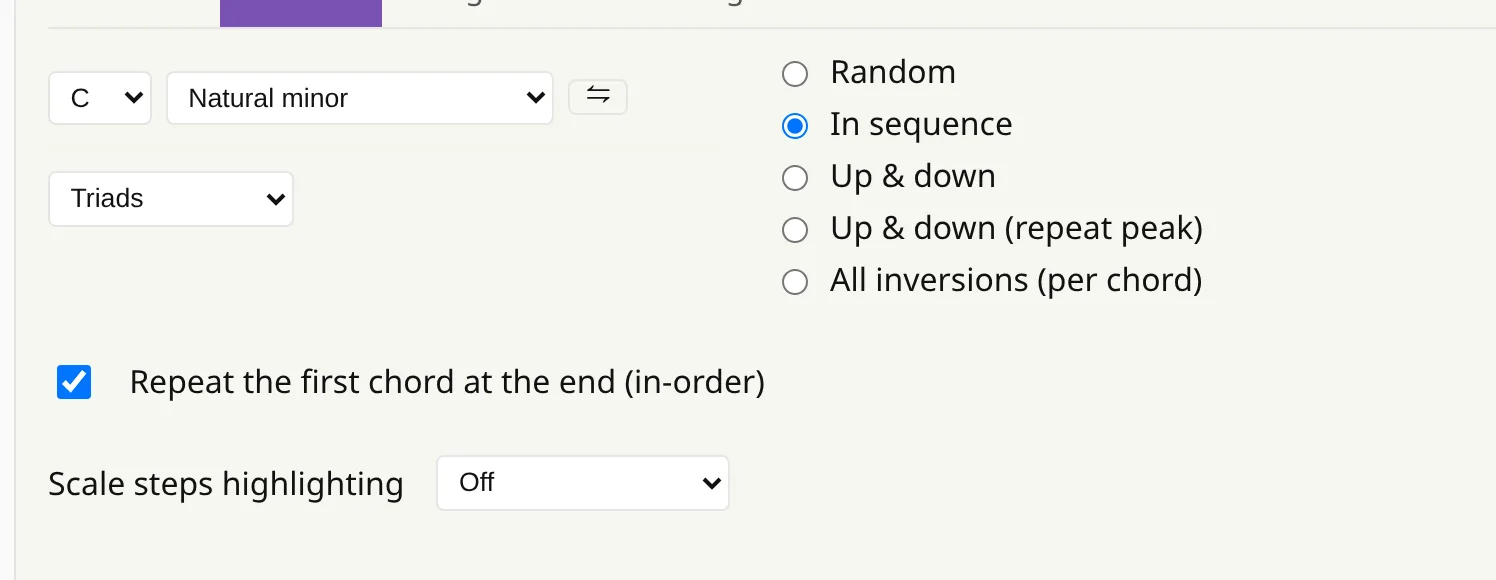
Choose the tonic, the scale, the voicing and how the question is worded. Then choose how the scale moves: straight up, up and down, up and down with the top note played only once, or into a new key on each pass, around the circle of fifths or chromatically.
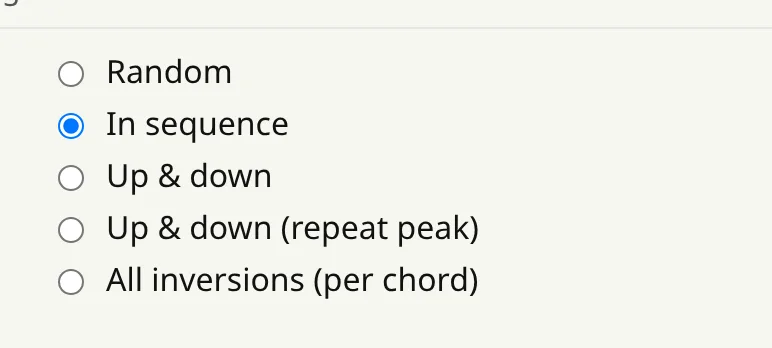
You can also require several flawless loops before a scale counts as done, and choose whether the top note is played once or twice where the scale turns around.
On a phone too