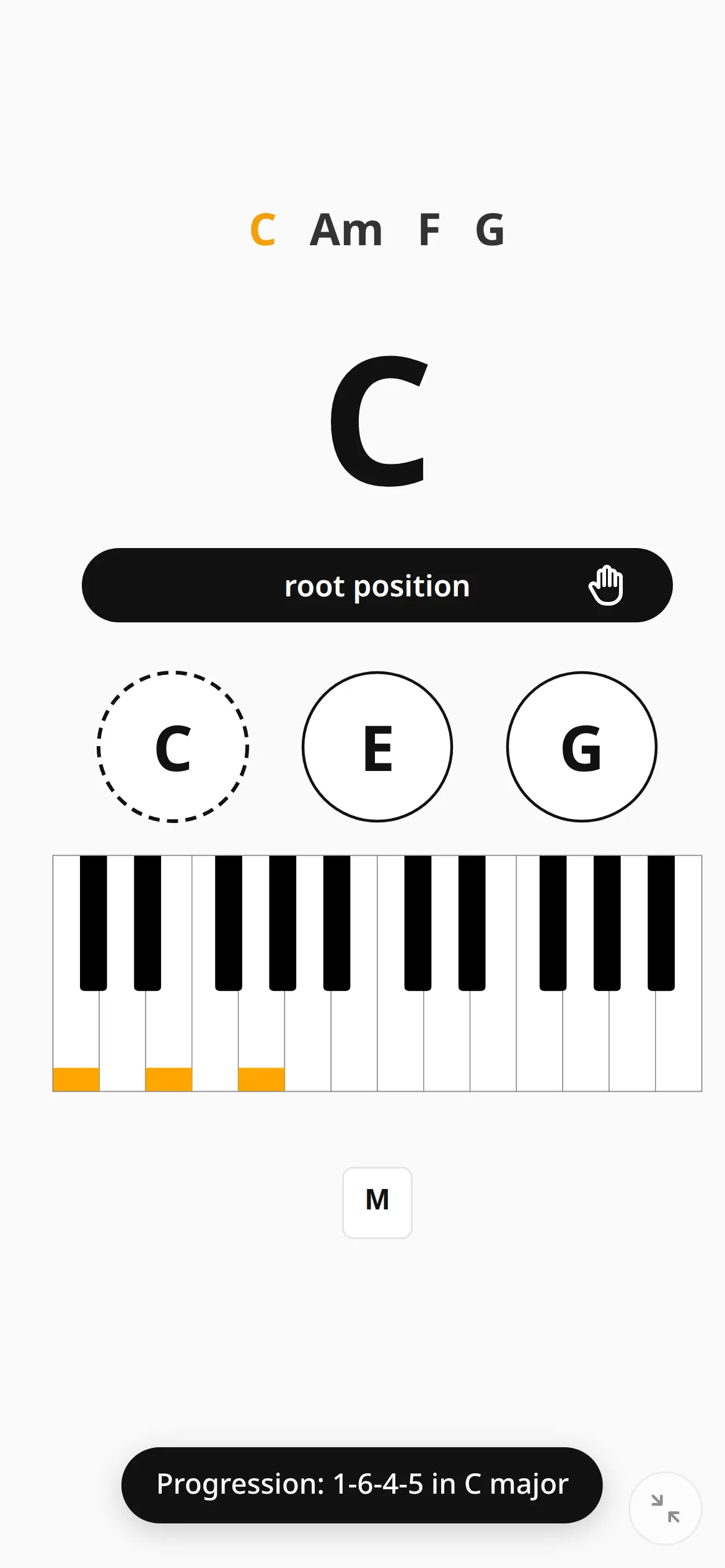
Chord progressions
Drill the chord sequences songs are built from. They are written in numerals, so one progression works in every key.
Chords in order
Songs put chords in familiar sequences: I–vi–IV–V, ii–V–I, the twelve-bar blues. Progression practice asks for those chords in order, again and again, until your hand knows the next chord without working it out.
The row above the question shows the whole progression with your place in it, so you can see the next chord before you need it.
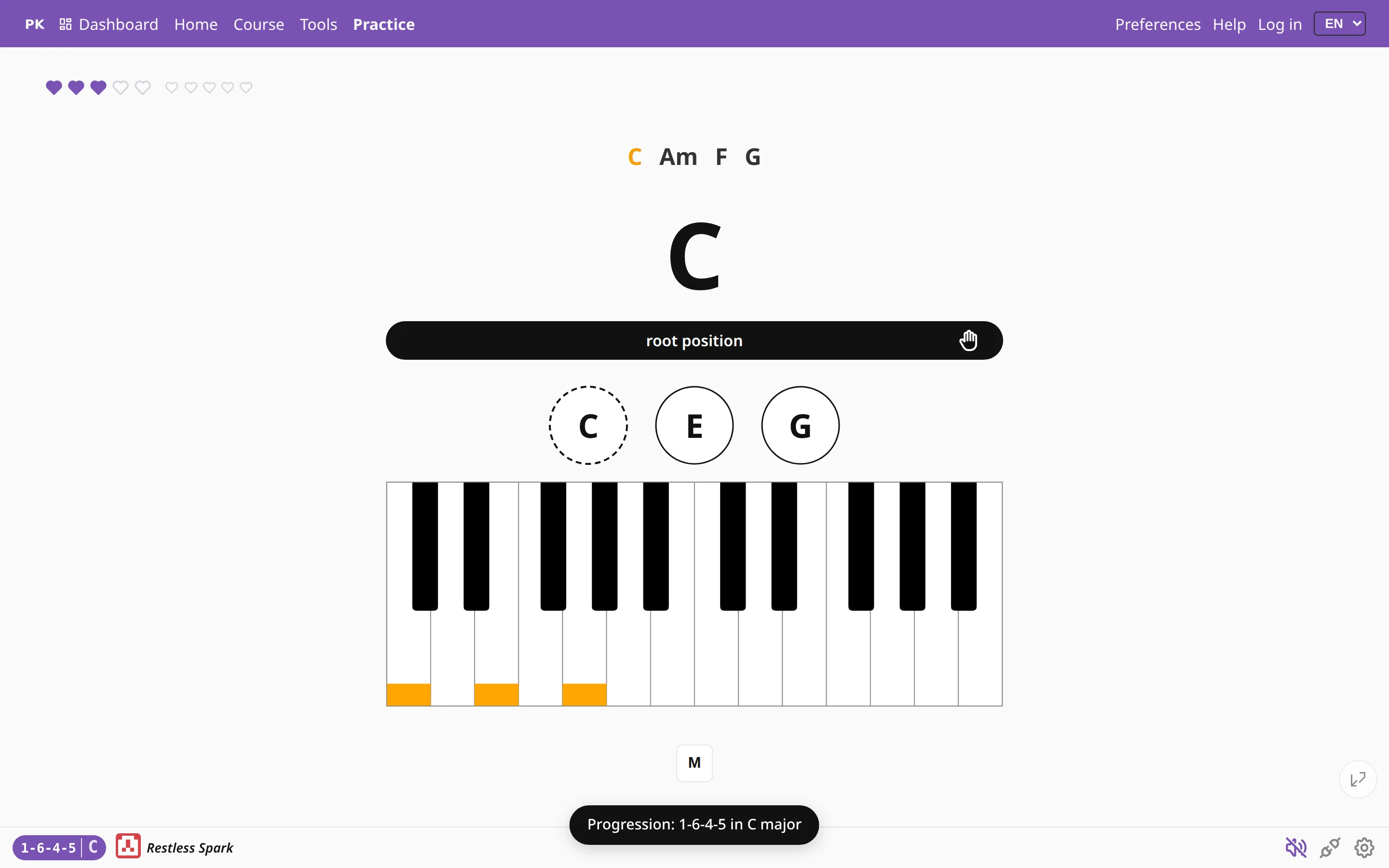

Write it in numerals, play it in every key
You type a progression as degrees rather than chord names: ii V I, or 1 6 4 5 if you prefer plain numbers. The same four symbols then give C–Am–F–G in C and D–Bm–G–A in D, and the app does the transposing.
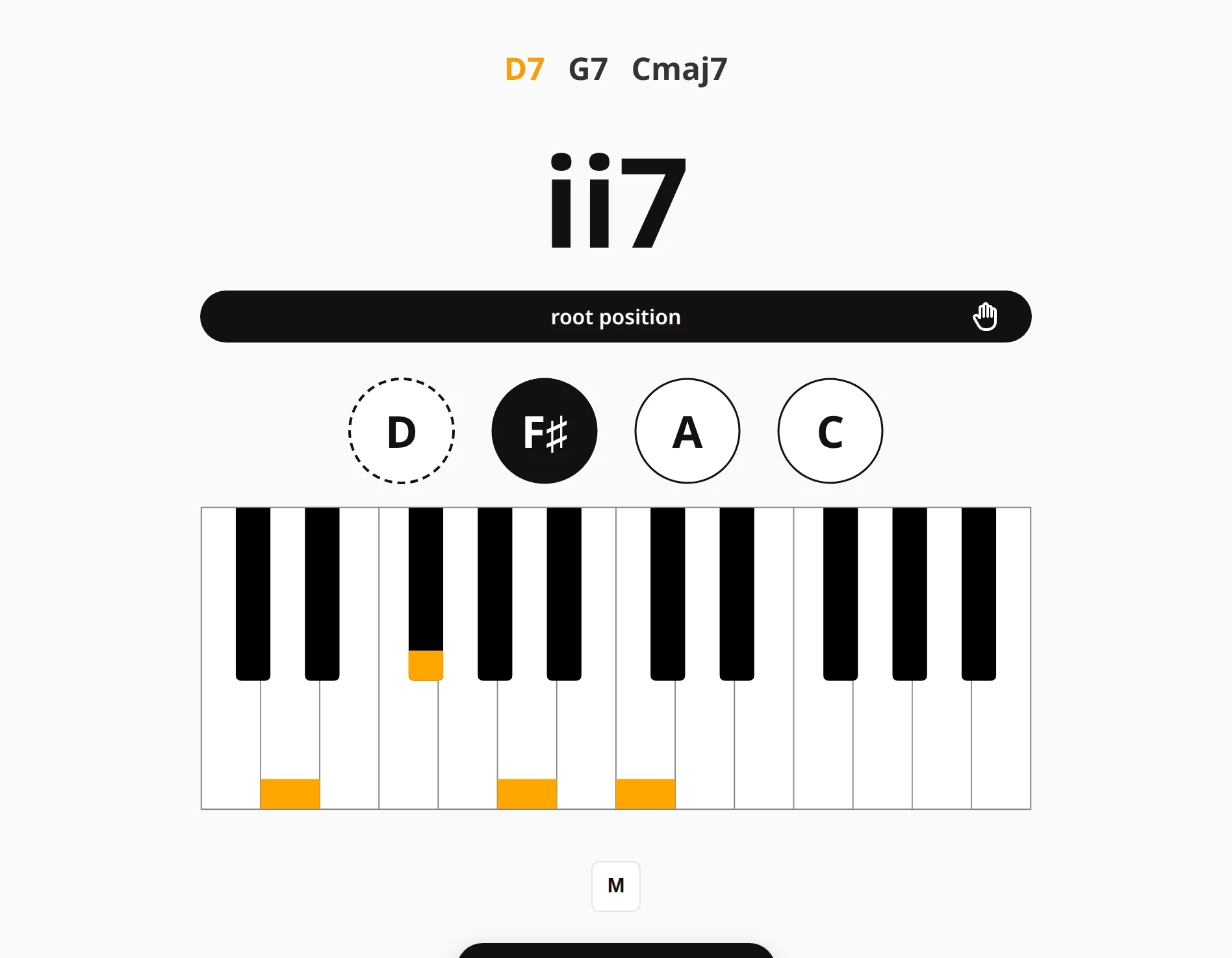
The notation also accepts qualities (ii7, V7, Imaj7, viim7b5), accidentals (bVII), inversions after a dot (V7.3, I.2) and bar lines (|) if you want to see the phrasing.
Sixty-two to start from
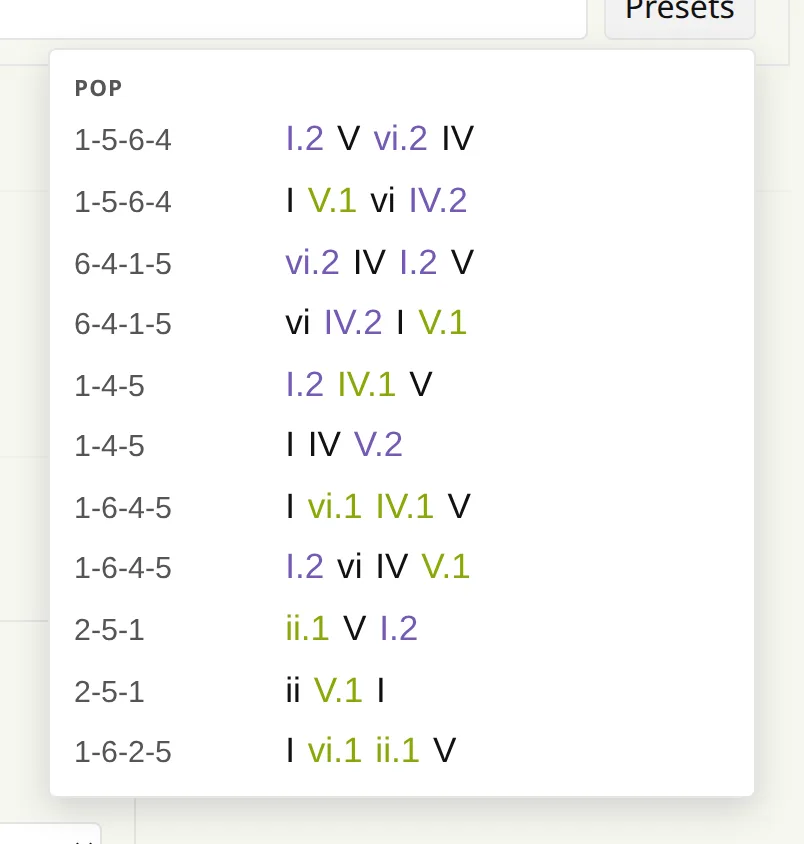
You can start from a preset instead of writing your own. The presets are sorted into pop, jazz and classical, and include doo-wop, the pop-punk four, several variants of ii–V–I, the circle progression and cadences. Pick one, then edit the text if you want to change it.
One progression, vi–IV–I–V, carries so many pop songs that it has a page of its own, with the song list and a link for every key.
Then move it around the circle
One key soon feels comfortable, so move on to the next. Turn on advancing after repeats and the drill switches to a new key once you have played the progression cleanly a few times. It moves round the circle of fifths or chromatically, in either direction.
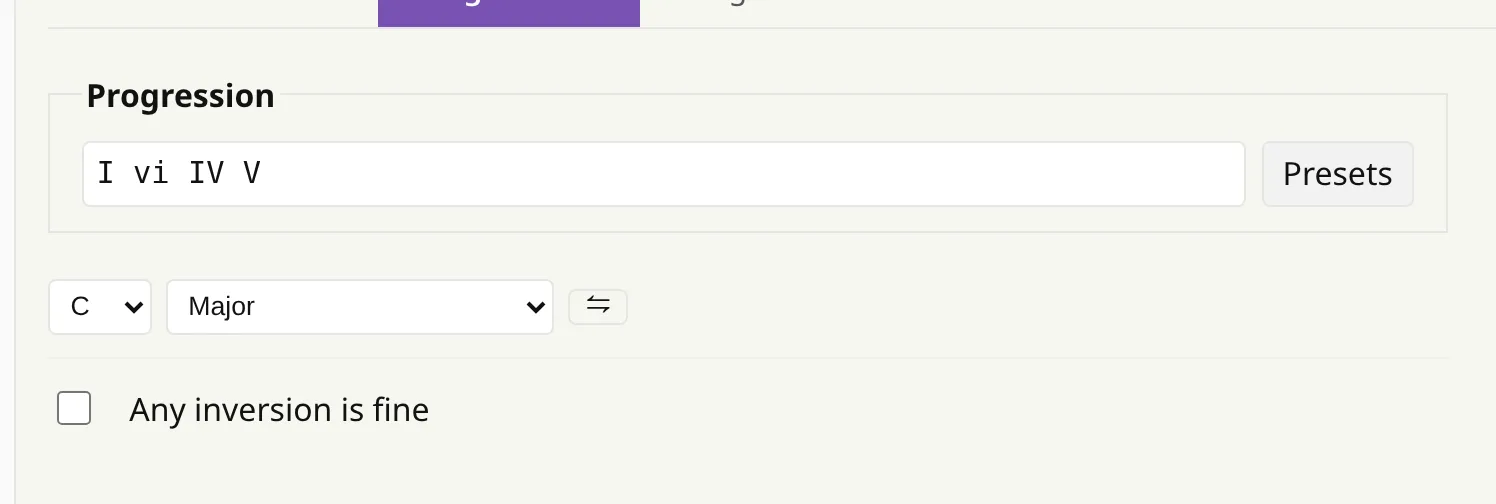
Progressions work in minor keys as well: set the scale to minor and the same numerals give the chords of the minor key.
On a phone