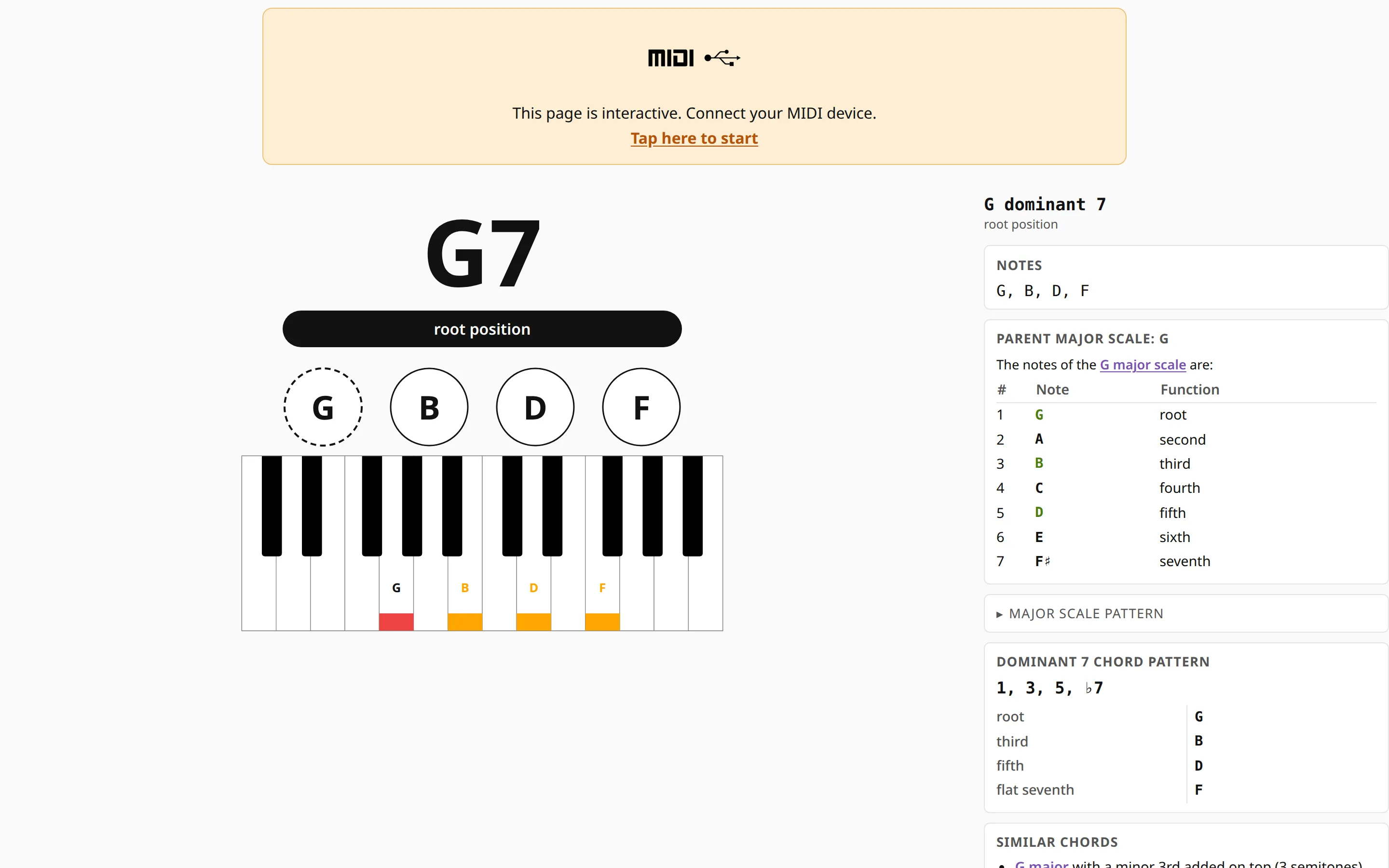
What is this chord, exactly?
Press I to see what the chord is made of: its notes, the scale it comes from, its formula, and the chords one note away from it.
The panel beside the question
The drill asks you to play G7; the panel explains why those notes make a G7. It opens beside the exercise, so you can read it and keep playing.
I opens and closes it. It always shows the chord on screen, including the inversion.
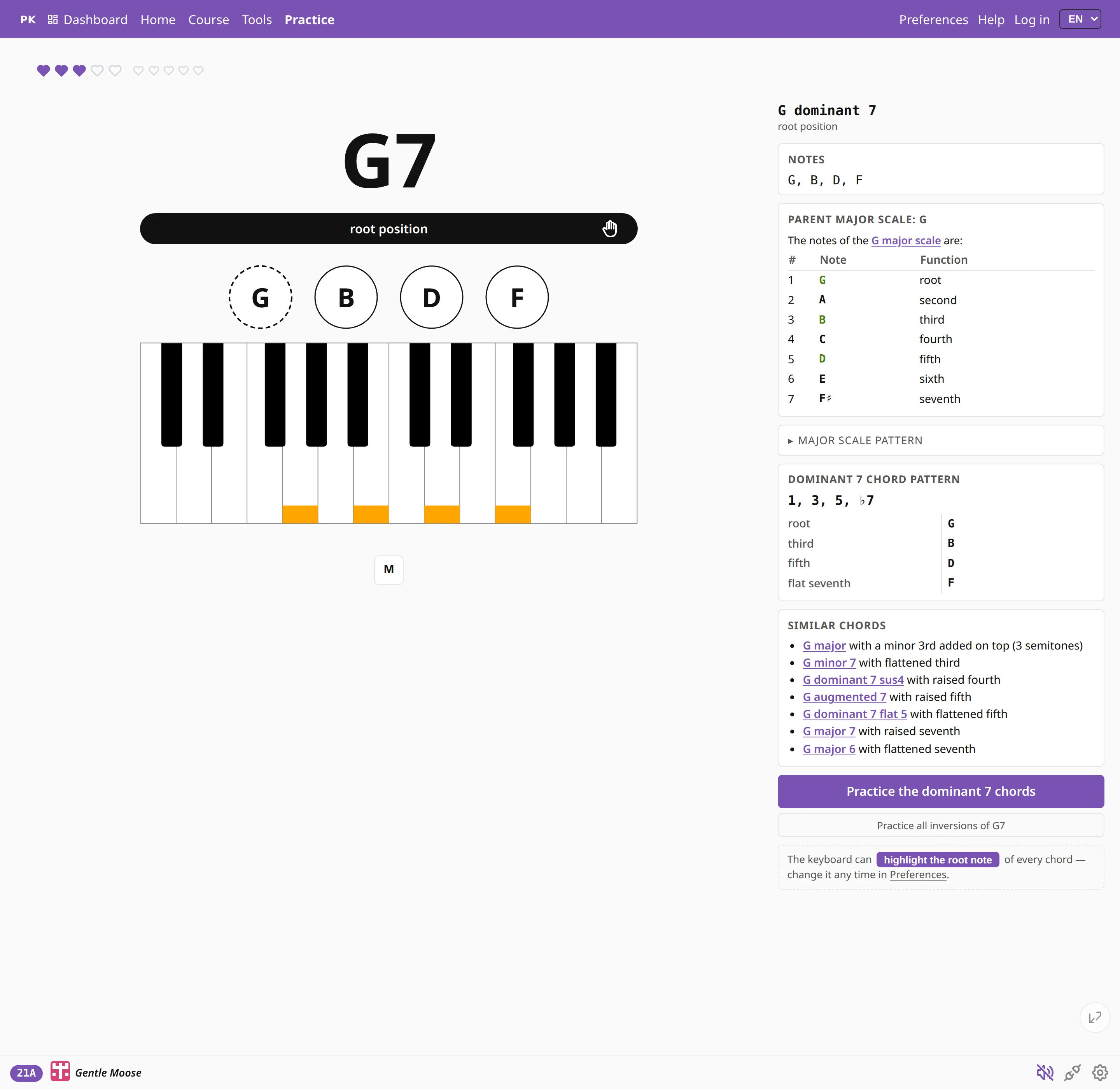
The chord formula
Every chord type can be written in scale degrees: a dominant seventh is 1, 3, 5, ♭7. The panel lists the degrees next to the actual notes, so you see the formula and this chord side by side.
Once you know a formula, you can use it in all twelve keys. That is the main reason to practice chords by type rather than memorizing shapes.
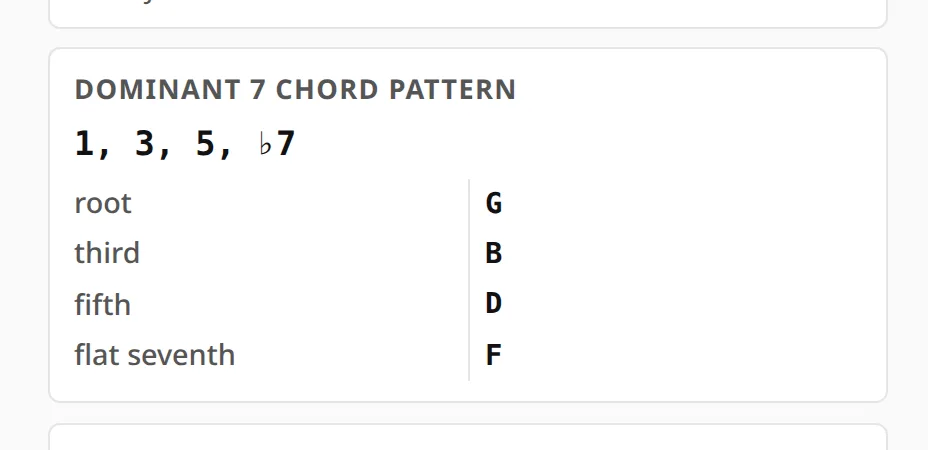
Where it comes from
Above the formula is the parent scale with the chord’s notes marked, so you can see where the chord sits in its key. Below it is the list of similar chords, the ones a single note away (a major with the third flattened, a seventh with the fifth raised), each linking to its own page.
For bigger chords the panel also shows upper structures: the plain triad in the top of a thirteenth, and how to play the whole chord as two chords, one in each hand.
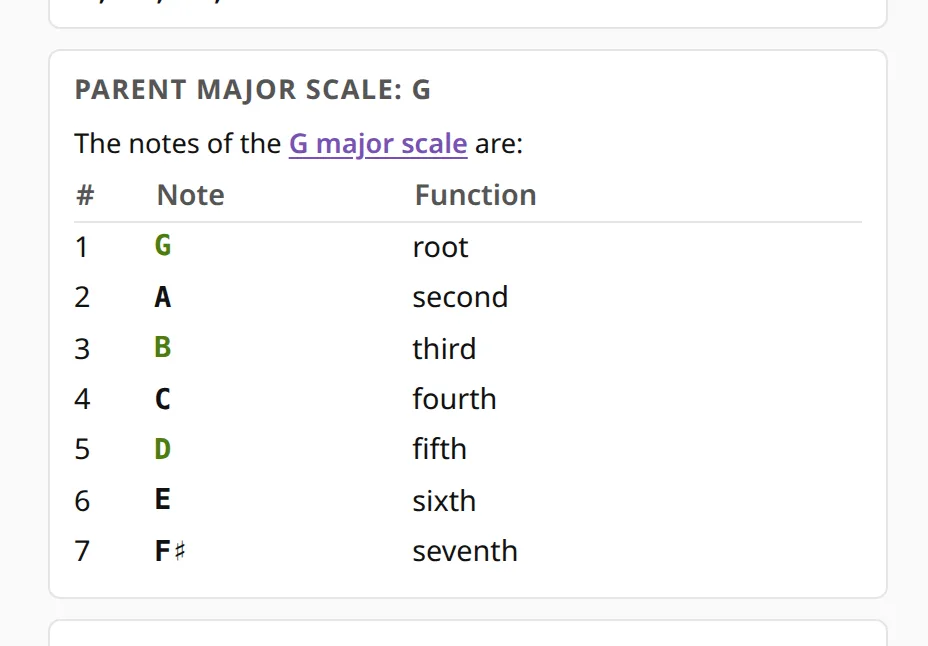
A page for every chord
The same information is also on permanent pages. Over three thousand chords have their own page, such as /c/G7 or /c/Cmaj, with the keyboard, the notes, the inversions and a link that starts a drill of that chord type.
You can bookmark a page or send it to a student. Anyone who arrives from a search engine can start playing without an account.