The chords you miss come up more often
The random draw is weighted by your mistakes, and the chord stats page shows the ranking it uses.
A weighted draw
If every chord in a pool comes up equally often, most of the time goes on the ones you already play without thinking, and the two you keep fumbling turn up no more often than C major.
So the draw is weighted. Every chord has a miss rate, and its weight rises steeply as the miss rate goes up. A chord you have just missed is more likely to come back within the minute, while the mistake is still fresh.
It is still a random draw: every chord in the pool keeps at least a tenth of its uniform chance, so none of them disappears and the session does not turn into the same two chords over and over.
The two lists
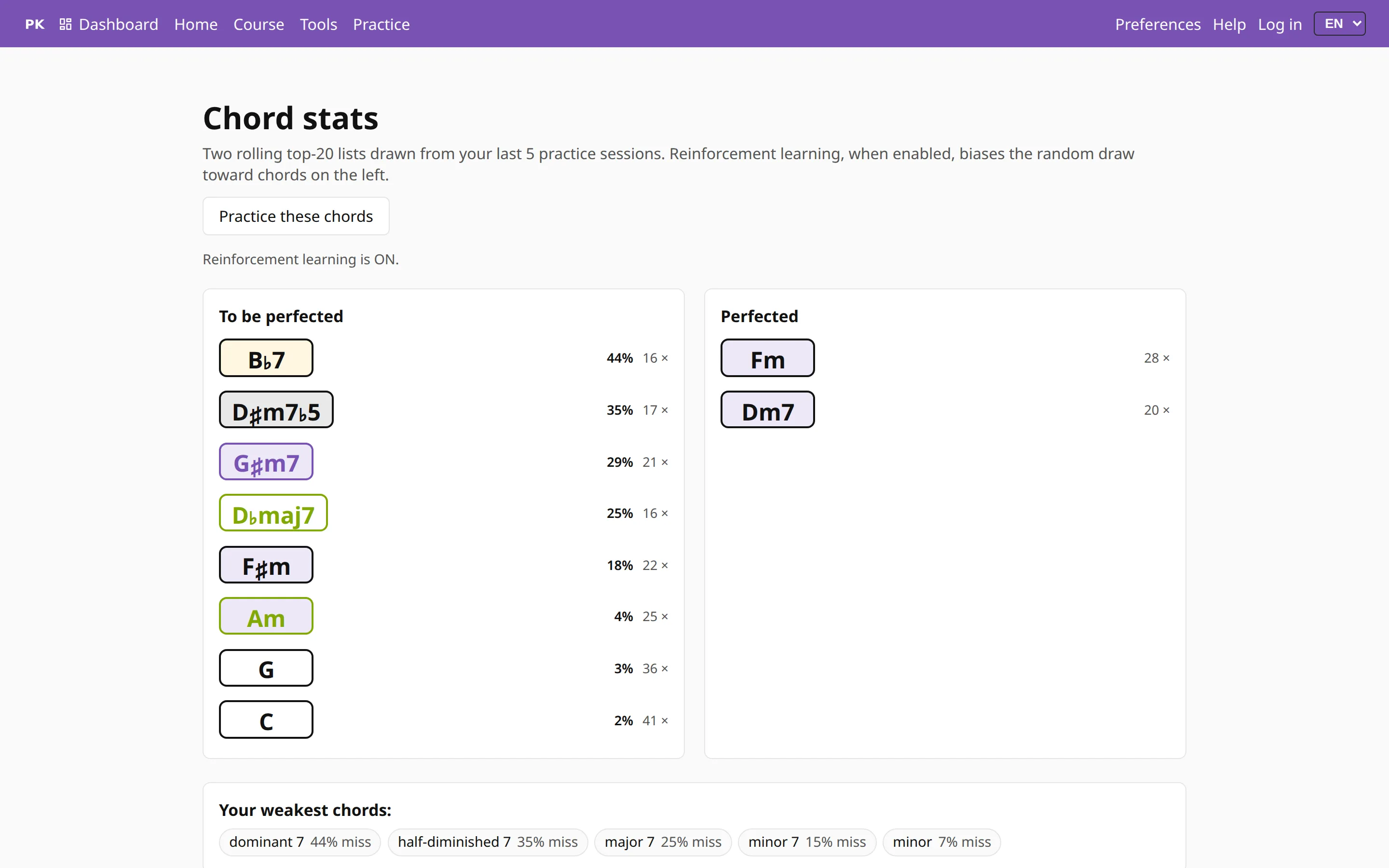
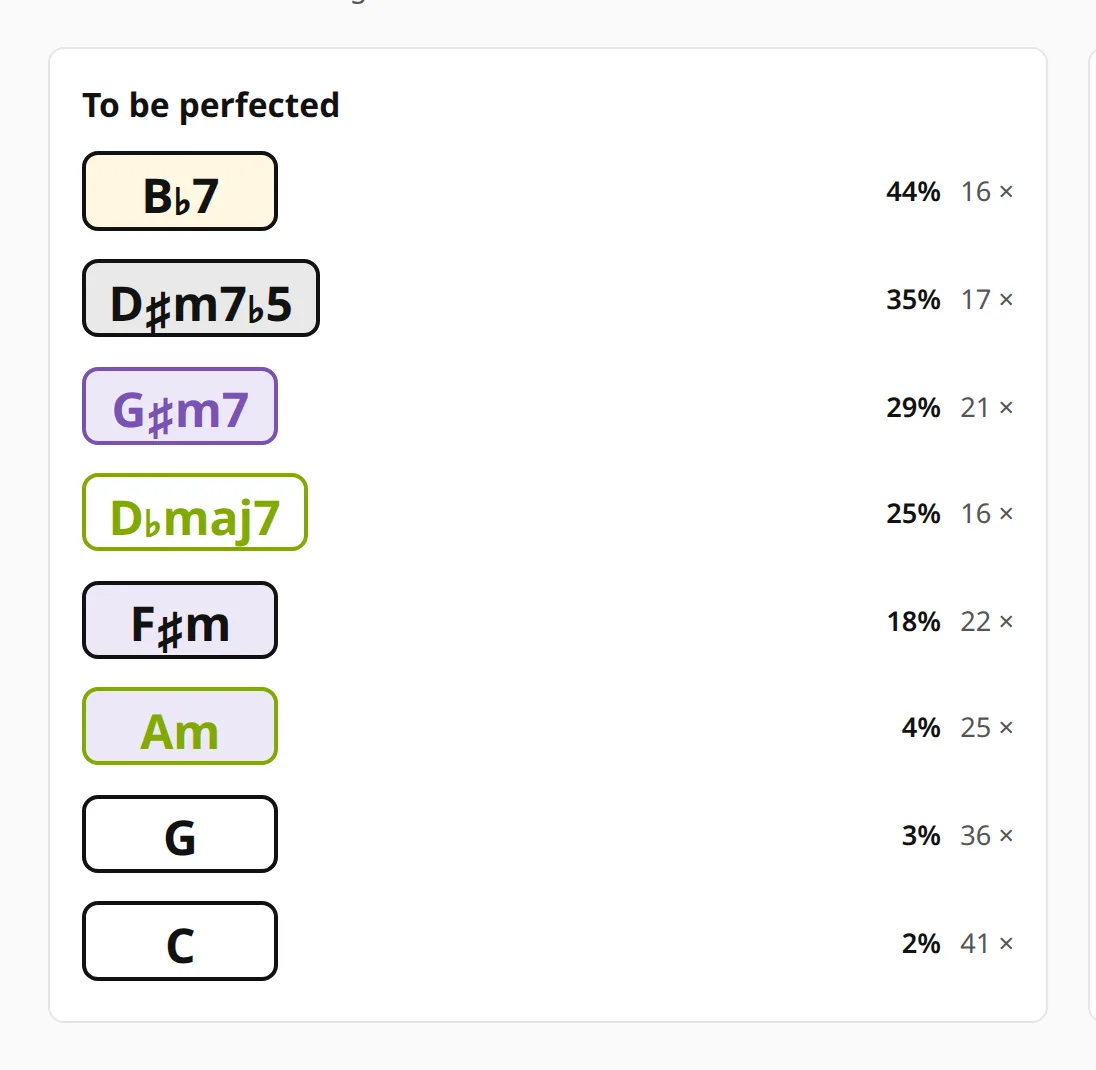
Chord stats shows the ranking the draw uses: To be perfected on the left, Perfected on the right, both based on your last five practice sessions. These are not lifetime scores, so a bad week eventually drops out.
Your weakest chord types
Figures for single chords jump around, but chord types give a steadier picture. The weakest-qualities row adds up the misses by type: half-diminished sevenths might be missed more than a third of the time, against 7% for plain minor triads. A figure like that is useful to bring to a lesson.

The Practice these chords button at the top of the page opens the weak list in the chord editor as a separate exercise.
How the weighting works
- A chord is ranked only after you have played it a few times in the recent window, so one unlucky miss does not mark it as weak.
- Old counts fade as you keep playing the same chord, so improvement shows up instead of disappearing into a long-term average.
- A chord missed within the last minute gets an extra boost, so it comes back while your hands still remember the mistake.
- Every chord keeps a minimum share of the draw.
The weighting applies to the chords subject in random order, the only place with a pool to draw from. Scales, progressions and songs are played in their own order, so there is nothing to re-weight.
